

This Thailand island hopping itinerary guides you through 2-months around the best Thai islands & the best things to do in Southern Thailand.
For backpackers, Southeast Asia remains the top destination, and why not? The region spanning 11 countries, from Myanmar to the Philippines, offers a rich variety of cultures, landscapes, and flavors.
Of all the regions, the crown jewel of Southeast Asia is Thailand. Its postcard-perfect beaches, warm turquoise waters, and an endless lineup of islands make it a perfect destination for backpackers. It’s, in fact, the mecca for Gen Z seeking fun, culture, and relaxation at affordable price points and a flying from Kuala Lumpur to Bangkok or even London to Bangkok, are easy route for many.
Many people visit for just a week or two. But if you really want to discover its hidden corners, you need around two months to explore the region. Two months gives you the perfect amount of time to really soak it all in without rushing from place to place.
In this article, we’ll take you through the best coastal spots Thailand has to offer, split between the country’s two main beach regions.
Two-Month Thailand Island Hopping Itinerary
Thailand’s geography has two distinct coastal experiences waiting for you. One is the Andaman Coast, and the other is the Gulf Coast. Here’s how to make the most of both.
Your adventure begins on the Andaman Coast, home to some of Thailand’s most iconic landscapes. Here’s what you must explore in the first month:
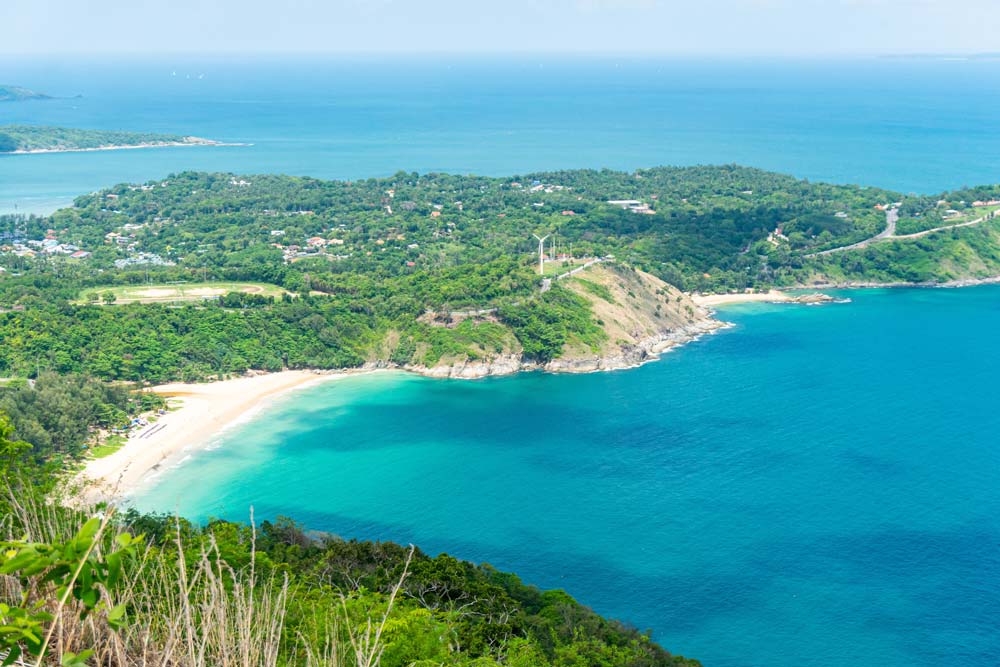
Week 1: Phuket & Phi Phi Islands
Kick off your adventure with Phuket, Thailand’s largest island and one of its busiest destinations. More than 14 million tourists visit the island every year; there are many reasons to visit Phuket on your trip to Thailand.
Phuket offers a wide range of experiences, from raucous nightlife or relaxed beach days, to impressive Buddha’s and gorgeous spas; we love exploring the best things to do in Phuket.
Patong Beach is the island’s busiest and most famous beach, known for its nightlife and entertainment. Here, the legendary Bangla Walking Street offers a night out like no other.
For those seeking a quieter scene, the beaches of Kata and Karon offer pristine sands, clear waters, and a more laid-back vibe.
From Phuket, a short ferry trip takes you to the Phi Phi Islands. Once there, you can hike to the Phi Phi Viewpoint for an amazing view of the island. Another must-do is a day trip to Maya Bay, which was made famous by the movie ‘The Beach’.
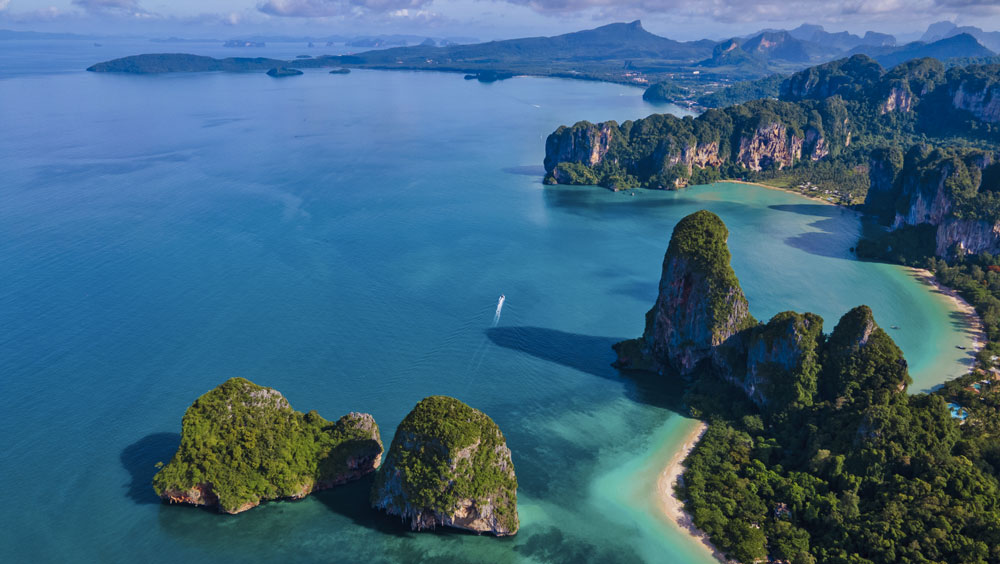
Week 2: Krabi & Railay Beach
Next, head to Krabi. It’s a major tourist hub and the gateway to the famous marine playground of Phang Nga Bay, where the legendary ‘James Bond Island’ is located and one of the most beautiful places in Thailand.
A short longtail boat ride from Ao Nang brings you to Railay Beach, a stunning locale that is a must-see stop. The most popular activity here is rock climbing.
If rock climbing is not your cup of tea, there are other activities. You can rent a kayak to explore hidden beaches. A hike to the viewpoint offers stunning views of the area.
Beyond Railay, the Krabi mainland offers more to explore. Take a day trip to the nearby Four Islands (Chicken Island, Poda Island, Phra Nang Cave Beach, and Tup Island). You can snorkel in vibrant coral reefs, relax on stunning beaches, and even witness unique natural phenomena like the sandbar at Tup Island.
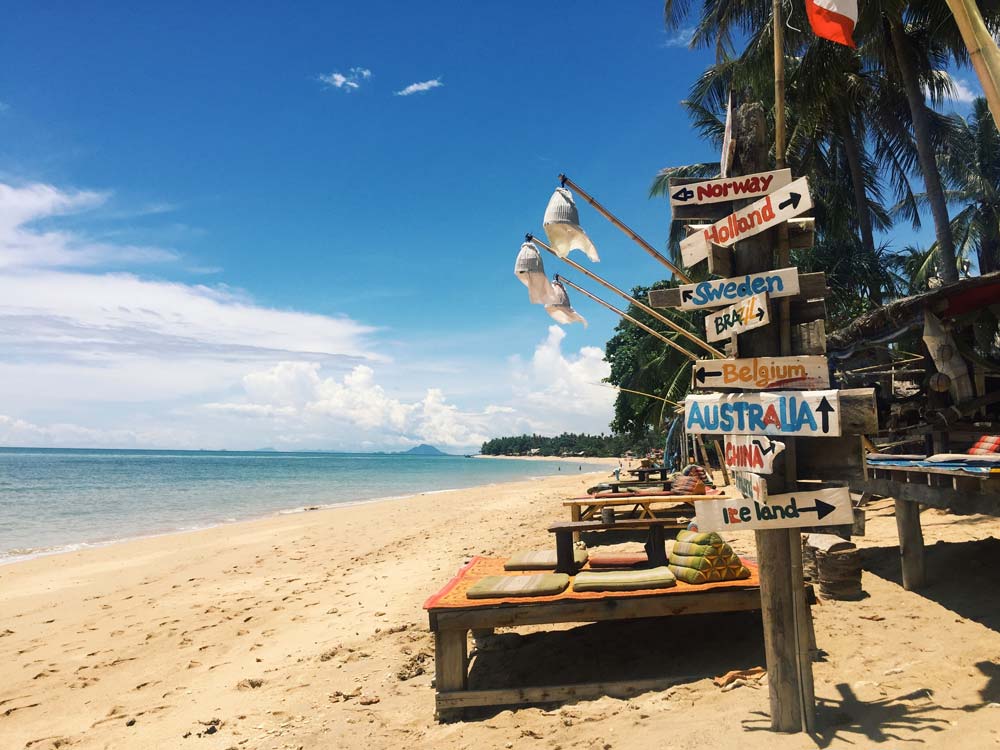
Week 3: Koh Lanta
After the high energy of Krabi, travel to Koh Lanta for the next perfect stop on your Thailand Island hopping itinerary. This island has a very relaxed and laid-back feel and a great spot for first time visitors in Thailand.
The north of the island has the most popular beaches. Long Beach and Khlong Dao Beach are favorites. If you want more privacy, head south. You can find quiet, secluded spots there.
There are plenty of things to do on Koh Lanta. You can rent a motorbike to explore Old Town. It’s a nice way to see the island at your own pace. You can also take a snorkeling tour to four different islands. These tours often include a visit to the famous Emerald Cave.
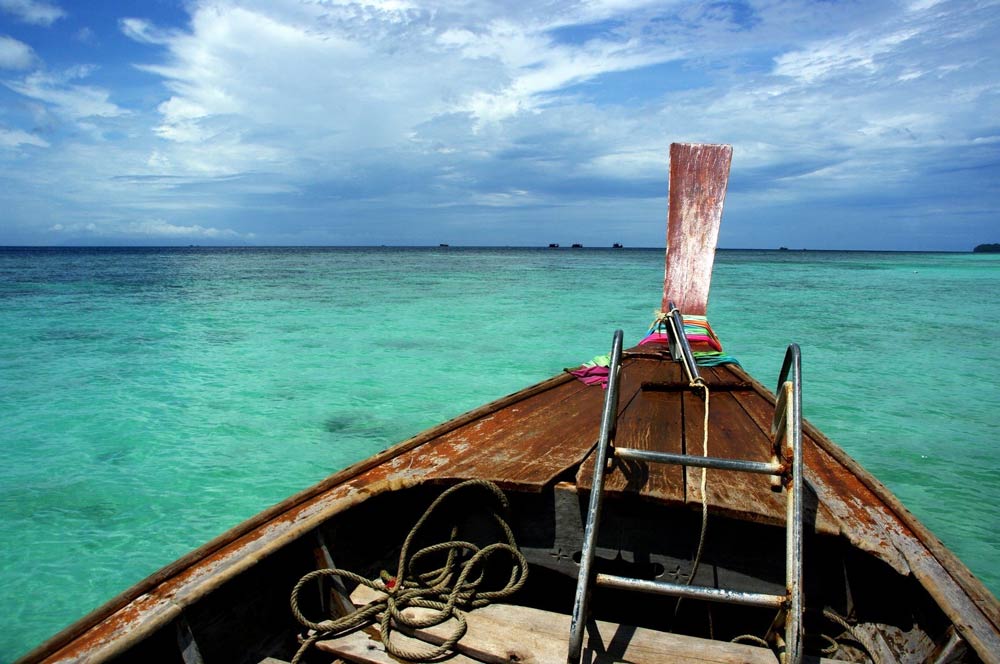
Week 4: Koh Lipe
Your last stop on the Andaman side is Koh Lipe, often called the “Maldives of Thailand. This tiny island sits near the Malaysian border and offers some of the clearest water you’ll ever see and the best time to visit Koh Lipe has to be outside of the monsoon season.
You can spend your days exploring Walking Street, the main hub for shops, restaurants, and bars. Evenings are best spent relaxing on the beach and enjoying the stunning sunset views that are a main attraction in themselves.
For those interested in marine life, you can go on snorkeling excursions to nearby islands like Koh Adang during your Thailand island hopping itinerary.
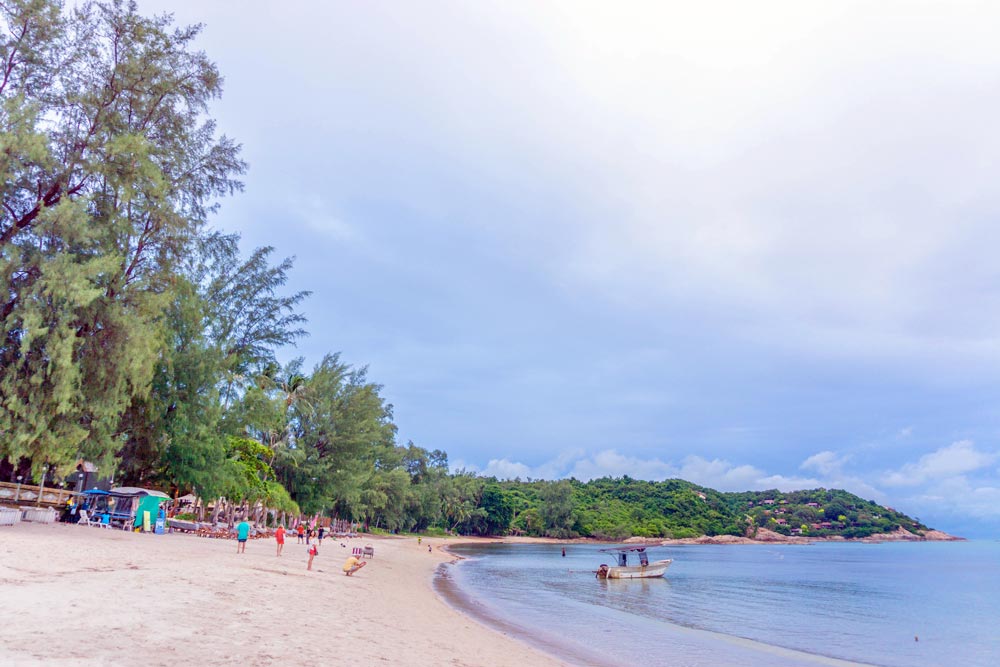
The second half of this adventure explores the Gulf of Thailand. Here, you’ll find a different vibe focused on diving, wellness, and beach life. Some treasures of the Gulf of Thailand are:
Week 5: Koh Samui
Koh Samui is the largest island in this area and offers a good mix of party scenes and quiet beaches. It’s more developed than some other islands, which means better infrastructure and more dining options. You can also travel from Krabi to Koh Samui with ease too.
There are plenty of fun things to do in Koh Samui whether you are visiting as a solo traveler, couple or family. Chaweng is the most crowded and lively, known for its bustling nightlife and wide selection of hotels and restaurants. But if you’re seeking a quieter yet still popular option, head to Lamai.In the north, Bophut is known for its family-friendly vibe and the historic Fisherman’s Village, while Maenam offers quiet, budget-friendly beachfront bungalows.
Beyond the beaches, Koh Samui is a hub for exploration. You can go ziplining through the rainforest. There are also waterfalls to explore just make sure to try and visit the island during the best time to visit Koh Samui. You can visit famous natural landmarks like the Grandmother and Grandfather Rocks.
Week 6: Koh Phangan
You can travel easily from Koh Samui to Koh Phangan, next on our Thailand island hopping itinerary. The island’s most famous event is the monthly Full Moon Party. This massive festival attracts tens of thousands of partygoers each month.
Koh Phangan has a quiet side, too. The island offers a spiritual escape in the Srithanu area. Here, travelers can find affordable yoga classes, healing sound baths, and a calm atmosphere. You can also hike to waterfalls like Phaeng Waterfall and visit temples with beautiful views. September, October and November are the best months to visit in Koh Phangan, when prices and tourist numbers drop, but it can rain a lot at this time.
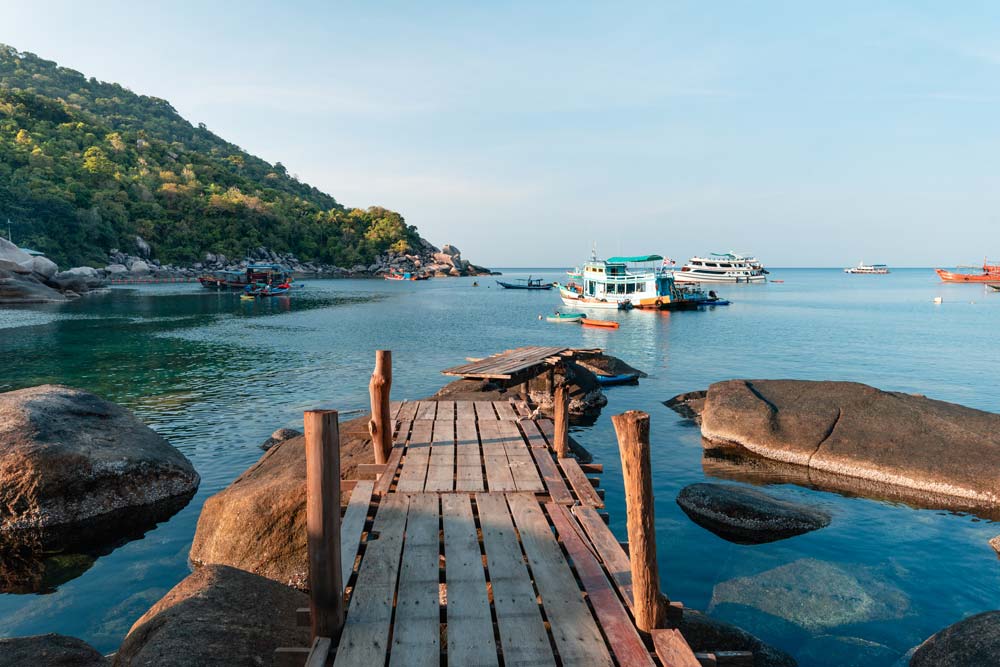
Week 7: Koh Tao
Koh Tao is the smallest of the three main Gulf islands and is known for its relaxed vibe and incredible underwater world. It’s often referred to as “backpacker mecca for diving” because of its vibrant marine life and unique topography.
The island’s reputation for diving attracts travelers from all over who come to get their PADI certification.
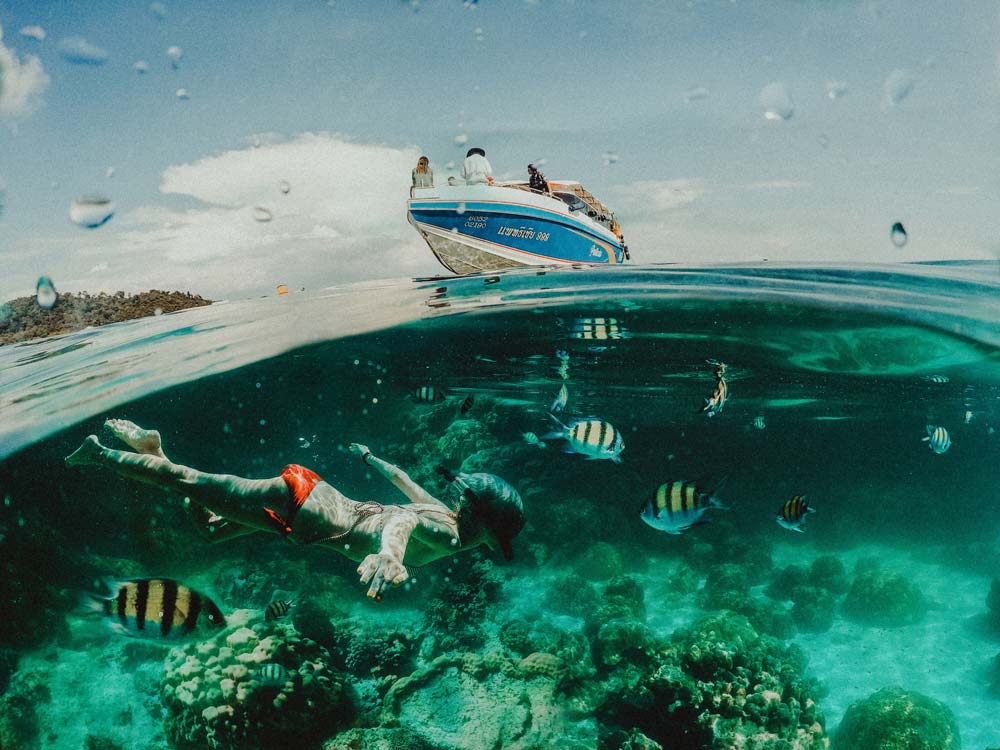
You’ll find the best snorkeling right off the beach. Tanote Bay is a snorkeler’s dream, with a reef you can walk into and a chance to see blacktip reef sharks. Shark Bay, despite its name, is famous for encounters with sea turtles that come to feed at sunset. We love stayed at Tanote Villa Koh Tao Resort and at night, visit Sairee Beach; it’s the main nightlife spot on the island.
If you are short on time in Thailand, you could travel directly using the ferry from Koh Samui to Koh Tao.
Week 8: Back to the Mainland: Hua Hin or Chumphon
For your final week, head back to the mainland. You’ve got two great options here: Hua Hin and Chumphon.
Hua Hin is closer to Bangkok and is known for its night markets, relaxed beach, and mix of Thai and expat communities; there are so many things to do in Hua Hin! The town is filled with spas, affordable seafood restaurants, and a famous night market.
Chumphon, on the other hand, is a quiet coastal town. There, you can explore hidden caves or kayak through mangrove forests. It is a perfect stop if you want to end your trip away from all the crowds.
Tips for Backpacking Thailand
Before you go, here are a few tips to ensure a smooth backpacking trip:
1. Pack Light and Smart
The golden rule for any backpacking trip? Less is more. You’ll be moving around a lot, from ferries and buses to tuk-tuks. A heavy bag will feel like a burden.
Stick to versatile clothing you can mix and match, quick-dry fabrics for humid weather, and essentials like a power bank and a dry bag. Remember, laundry services are cheap and everywhere, so you don’t need two months’ worth of clothes.
Don’t forget to bring reef-safe sunscreen. Many places have banned sunscreens that contain coral-damaging chemicals.
2. Don’t Forget Your Medicines
Don’t get caught up so much on packing sunscreen, swimsuit, and bug spray that you forget your medicines.
If you’re on prescription medication, always bring enough for your entire trip. Refilling certain prescriptions in Thailand can be tricky, especially if you rely on specific brands. Keep them in their original packaging to avoid confusion at customs.
Don’t forget contraceptives. They are available in Thailand, but not every brand or method may be easy to find. Bringing your own gives you peace of mind, especially if you’re on pills, patches, or an injectable method.
It’s also smart to stay informed about what you’re using. Not all options are risk-free.
3. Budget Smart
Thailand is backpacker-friendly. You can live on around $30 a day. But costs can creep up if you’re not careful.
Planning a daily budget and sticking to it can prevent you from overspending.
For meals, head to local street markets instead of tourist restaurants. Not only is the food delicious, but it’s also much cheaper. When it comes to ferries, buses, or island tours, book ahead whenever possible. Prices tend to rise at the last minute, and advance tickets almost always work out better.
It’s also a good idea to keep a small emergency fund separate from your main budget. And don’t be shy about bargaining in local markets; it’s a normal part of shopping culture in Thailand.
Spending two months backpacking along Thailand’s seashores offers the best of both worlds. You can experience lively islands with buzzing nightlife and also find quieter spots where time seems to stand still.
From the lively beaches of Koh Phangan to the hidden gems of Trang, this two-month journey lets you taste every flavor of Thailand’s coastline. Just remember to slow down sometimes and soak it all in. That’s what the best travel experiences are made of.
Thailand Island Hopping Itinerary FAQ
Most travelers should allow 10 to 14 days for a Thailand island hopping itinerary. This gives you enough time to visit three or four islands without spending every other day on a ferry or bus. If you only have one week, focus on a single region, such as the Andaman Coast or the Gulf of Thailand.
The best route depends on the time of year.
November to April: Phuket → Koh Phi Phi → Koh Lanta → Krabi (Andaman Coast)
May to September: Koh Samui → Koh Phangan → Koh Tao (Gulf of Thailand)
Sticking to one region reduces travel time and avoids unnecessary transport connections.
The best months are generally December to March, when much of Thailand enjoys sunny weather, calm seas, and excellent snorkeling conditions. If you’re visiting during Thailand’s rainy season, the Gulf islands often have better weather than the Andaman Coast.
Thailand island hopping can suit almost any budget. Backpackers can travel for around $40–60 USD per day, mid-range travelers should budget $80–150 USD per day, while luxury travelers can easily spend $250 USD or more per day depending on accommodation and tours.
If it’s your first trip, some of the most popular islands include:
– Phuket for convenience and nightlife
– Koh Phi Phi for dramatic scenery
– Koh Samui for beaches and resorts
– Koh Tao for snorkeling and diving
– Koh Lanta for a quieter atmosphere
The best choice depends on whether you want nightlife, relaxation, diving, or family-friendly beaches.
Yes. Most travelers arrange transport independently using ferries and speedboats between the islands. Tours are only necessary if you want to visit smaller islands, national parks, or snorkeling spots that aren’t served by public boats.
The majority of islands are connected by ferries and speedboats. Larger islands like Phuket, Koh Samui, and Krabi also have airports, making it easy to combine flights with ferry transfers. Many transport companies sell combined bus, ferry, and hotel transfer tickets.
Yes. Many islands are ideal for families, particularly Koh Samui, Koh Lanta, and Phuket, which offer family-friendly resorts, calm beaches, and plenty of activities. Some islands, such as Koh Phi Phi and Koh Phangan, have lively nightlife areas but also quieter beaches suitable for families.
During the high season (December to March), it’s a good idea to book ferry tickets a few days ahead, especially around Christmas, New Year, and Songkran. During the low season, you can often book a day or two before travel.
Thanks for reading!
We love living in Bangkok, exploring Thailand and sharing everything we learn along the way. Comment below if you have any questions and follow us along on Instagram or Facebook.
We value and appreciate all our readers and supporters. If you wish to support That Bangkok Life then please use our Amazon affiliate for your next purchase, it doesn’t cost you anything extra but we make a small commission, allowing us to continue building this website and sharing our love of travel with you.


[…] High Season – November to April. You can expect warm weather and very little rainfall during this time, however December and January is peak season, meaning hotels are more expensive than usual as this is a common choice for those enjoying some Thailand island hopping. […]
[…] Thailand Island Hopping Itinerary (2 Month Guide) – That Bangkok Life […]
[…] With its mix of adventure, relaxation, and bohemian charm, Koh Phangan appeals to a wide range of travelers and should be included on your Thailand itinerary. […]