
Learning how to visit Wat Benchamabophit Temple with ease can make for a stress-free morning exploring this often overlooked temple in the heart of Bangkok; we share everything you need to know before you go.
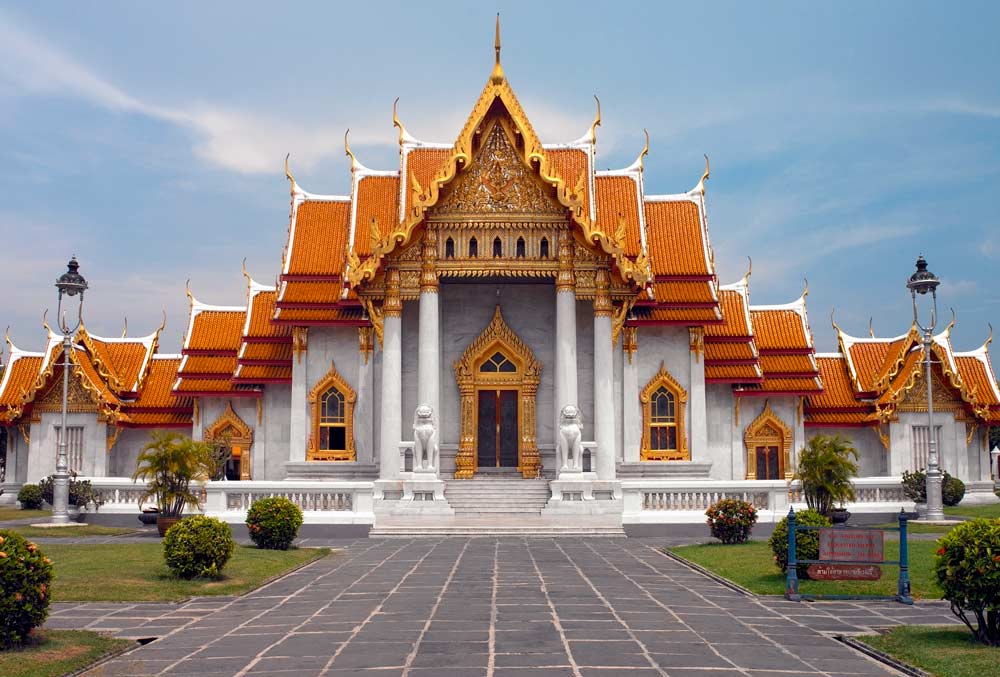
If you are looking for one of the most beautiful temples to visit in Bangkok, Wat Benchamabophit Dusitvanaram should be high on your list. Better known to visitors as the Marble Temple, this elegant Buddhist temple in Bangkok’s Dusit district is famous for its gleaming white Italian marble, distinctive red-and-gold roof, beautiful Buddha images and unusually calm atmosphere.
Unlike some of Bangkok’s more famous temples, Wat Benchamabophit can feel surprisingly peaceful. It is away from the busiest tourist areas around the Grand Palace and Wat Pho, making it a particularly good choice if you want to experience Bangkok’s temples without spending your entire visit navigating huge crowds.
So, if you are planning a visit, here is everything you need to know about how to get to Wat Benchamabophit, when to go, what to wear, how much it costs, what to see and how long you should allow.
Wat Benchamabophit Temple: Everything you need to know
| Information | Details |
|---|---|
| 📍 Location | Dusit, Bangkok, Thailand |
| 🛕 Also known as | The Marble Temple |
| 💰 Entrance fee | Around 50–100 THB for foreign visitors |
| 🕐 Opening hours | Generally 8:00 AM–5:00 PM; hours can vary on Sundays and public holidays |
| ⭐ Best time to visit | 8:00–10:00 AM for cooler temperatures, softer light and fewer crowds |
| ⏱️ How long to spend | Around 45–60 minutes |
| 🚕 Best way to get there | Grab or taxi is the easiest option |
| 🚇 Nearest MRT | Sam Yot MRT, followed by a taxi or other local transport |
| 👗 Dress code | Modest clothing covering shoulders and knees |
| 📸 Photography | Yes — the marble temple and Buddha gallery are particularly photogenic |
| 🙏 Main highlight | The beautiful Italian marble ubosot (ordination hall) |
| 🧘 Inside the temple | A replica of the famous Phra Buddha Chinnarat |
| 🗿 Buddha gallery | 52 Buddha images representing different artistic styles |
| 👨👩👧 Family friendly? | Yes — the compact grounds make it relatively easy to explore with children |
| 💡 Top tip | Visit early in the morning and allow time to walk around the cloister rather than only photographing the main temple |
Where is Wat Benchamabophit?
Wat Benchamabophit is located in Dusit, one of Bangkok’s historic districts, on Si Ayutthaya Road. Its full Thai name is Wat Benchamabophit Dusitvanaram Ratchaworawihan, but you will generally see it referred to simply as Wat Benchamabophit or the Marble Temple.
The temple’s location is important because it sits within an area strongly associated with the reign of Rama V. The development of the Dusit district and nearby royal buildings formed part of Rama V’s vision for a modernised Bangkok. This also means you can easily combine a visit to the Marble Temple with other attractions in the Dusit area rather than travelling across Bangkok just to see the temple.

How to Get to Wat Benchamabophit
Wat Benchamabophit is in Bangkok’s Dusit district, on Si Ayutthaya Road. The temple isn’t directly next to a BTS or MRT station, so Grab or a taxi is usually the easiest option, particularly if you’re visiting for the first time.
By Grab or Taxi
This is the simplest way to reach the Marble Temple is by using grab:
- Open Grab or your preferred taxi app.
- Search for Wat Benchamabophit Dusitvanaram.
- Check that the destination is the temple on Si Ayutthaya Road, Dusit.
- Set off with extra time if travelling during Bangkok’s rush hour.
- Ask the driver to drop you at the main entrance.
A taxi or Grab is especially convenient if you’re travelling with two or more people, as the fare can be shared between passengers.
By BTS Skytrain
Wat Benchamabophit doesn’t have a BTS station immediately outside the temple, but the BTS can be an easy, efficient way of getting around Bangkok.
- Take the BTS Skytrain to Phaya Thai Station.
- From Phaya Thai, exit the station and take a taxi or Grab to Wat Benchamabophit.
- Enter Wat Benchamabophit Dusitvanaram as your destination.
- Allow roughly 10–20 minutes for the final road journey, depending on traffic.
This is a useful option if you’re already travelling around Bangkok by BTS and want to avoid taking a taxi for the entire journey.
By MRT
You can also use Bangkok’s MRT network, although you’ll still need road transport for the final part of the journey.
- Take the MRT towards Sam Yot Station.
- Exit at Sam Yot.
- From the station, take a taxi or Grab to Wat Benchamabophit.
- Tell your driver you’re going to Wat Benchamabophit Dusitvanaram, the Marble Temple.
Because Sam Yot isn’t immediately beside the temple, this option is generally less convenient than taking a taxi or Grab from your starting point.

By Bus
Several Bangkok bus routes serve the wider area around the Marble Temple, including routes 72, 157, 503 and 510.
If you’re comfortable using Bangkok’s local buses:
- Check your starting point and identify the appropriate route.
- Take the bus towards the Dusit/Si Ayutthaya Road area.
- Get off at a stop close to Wat Benchamabophit.
- Walk the remaining distance to the temple entrance.
Bus routes and stops can change, so check a current navigation app before travelling rather than relying solely on an older printed guide.
By Car
If you’re driving yourself, navigate to Wat Benchamabophit Dusitvanaram on Si Ayutthaya Road. Parking is available near the temple, although spaces may be limited during busy periods.
Traffic is an important consideration. Bangkok’s roads can become congested, particularly during weekday morning and evening rush hours, so allow considerably more time than the map’s ideal driving time suggests.
Tip: If you’re planning to arrive when the temple opens, a direct Grab or taxi is the least complicated option. Set your destination to Wat Benchamabophit Dusitvanaram, rather than simply telling the driver “Marble Temple,” to avoid any confusion.
Why is Wat Benchamabophit called the Marble Temple?
The answer is wonderfully straightforward: marble.
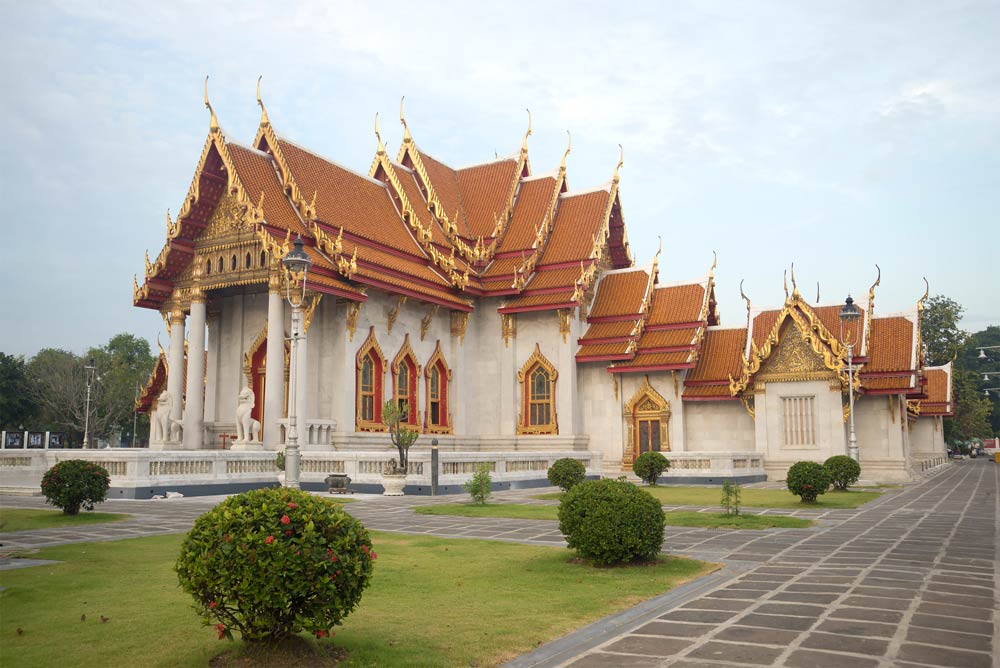
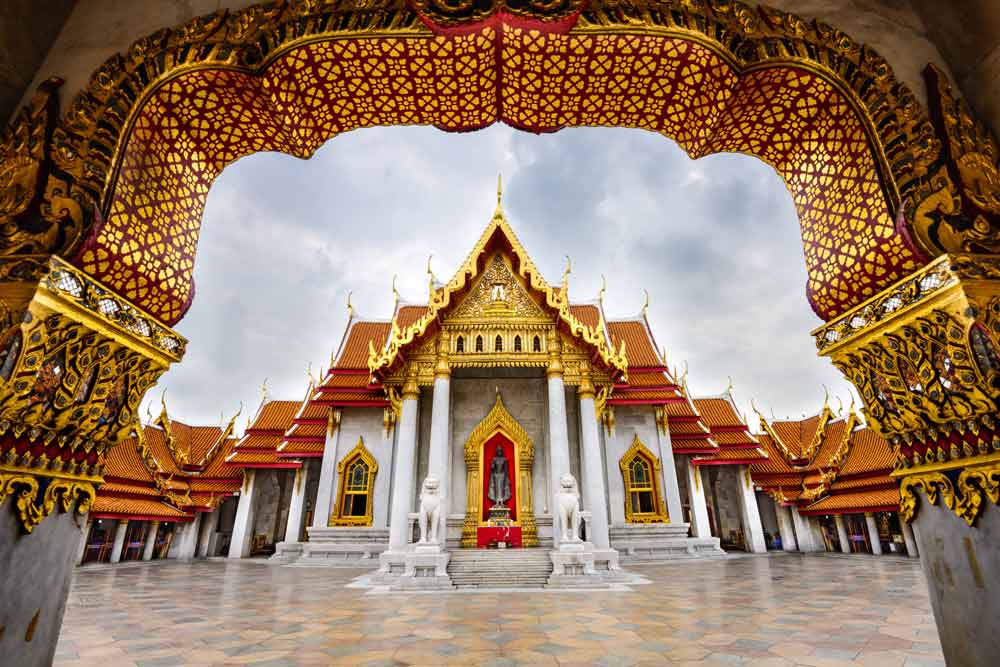
The temple’s main ordination hall, or ubosot, is clad in white marble imported from Italy. The brilliant white stone contrasts with the traditional Thai roof, creating the distinctive appearance that has made the temple so recognisable. The Tourism Authority of Thailand specifically highlights the Italian marble and the European influence visible in details such as the windows and materials.
It is an unusual combination.
When you first approach the temple, you will notice the classic Thai roof and ornate architectural details. Look closer, however, and you start to see the European influence in the marble, glass and overall symmetry.
This mixture is one of the reasons Wat Benchamabophit is so interesting. It isn’t simply an old temple that happens to look beautiful. It represents a period when Thailand was actively engaging with Western ideas while maintaining its own architectural and religious traditions.
What should you see at Wat Benchamabophit?
Although the Marble Temple itself is the main attraction, don’t make the mistake of arriving, taking a photograph of the front, and immediately leaving.
I’d recommend giving yourself around 45 minutes to 1 hour for a normal visit.
If you are particularly interested in architecture, photography, or Buddhist art, you could easily spend longer.
Here is a simple route to follow.
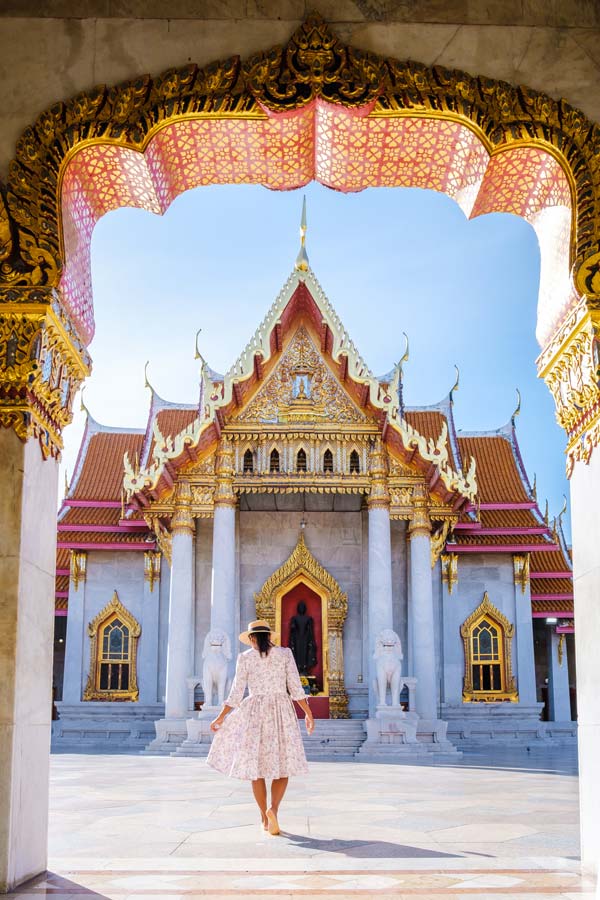
- Stop 1: The entrance: Take a moment before entering the main area to appreciate the exterior. This is where you’ll get some of the most recognisable photographs of Wat Benchamabophit. The building’s symmetry is particularly striking.
- Stop 2: The marble courtyard: Walk towards the main ubosot and take in the marble architecture from different angles. Don’t just photograph the front. The side views show off the relationship between the marble walls, roof, and surrounding courtyard particularly well.
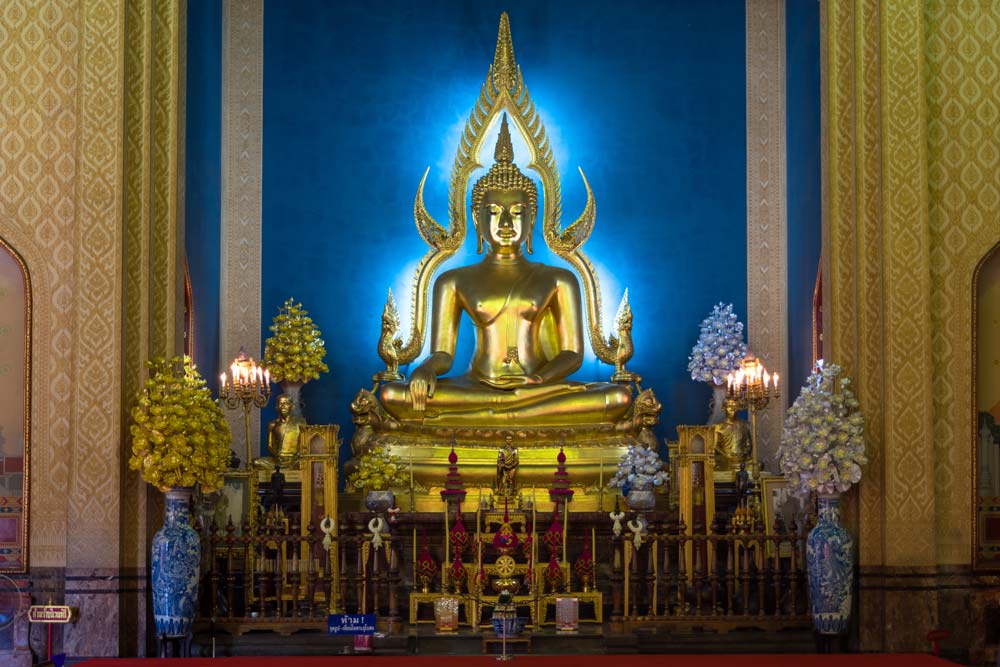
- Stop 3: The main Buddha image: Enter the ubosot if it is open to visitors and spend a few minutes appreciating the Buddha image and interior decoration. Remember that this is an active religious site rather than simply a tourist attraction, so keep your voice down and be respectful.
- Stop 4: The cloister This is one of the highlights where you can walk around the gallery and look at the 52 Buddha images. If you are travelling with children, this can actually be a fun way to encourage them to look more closely at the artwork: ask them to find the Buddha statue they like best and identify what makes it different.
- Stop 5: The gardens and surrounding buildings: Take a little time to explore the wider temple grounds. One of the nice things about Wat Benchamabophit is that the experience isn’t entirely focused on one enormous building; there are quieter corners where you can slow down and appreciate the architecture.
Best Time to Visit Wat Benchamabophit
| When to Visit | What to Expect | Best For |
|---|---|---|
| 8:00–10:00 AM | Cooler temperatures, softer morning light and fewer visitors | Best overall time |
| 10:00 AM–12:00 PM | Warmer and gradually busier, but still a good time to visit | Sightseeing |
| 12:00–3:00 PM | Hottest part of the day and stronger sunlight on the marble | Short visits |
| 3:00–5:00 PM | Temperatures begin to ease and the temple can become quieter | Late-afternoon visits |
| Weekdays | Generally quieter than weekends and public holidays | Avoiding crowds |
| Weekends & holidays | Potentially busier, particularly around popular visiting times | Flexible itineraries |
| November–February | Generally cooler and more comfortable for sightseeing in Bangkok | Best time of year |
| March–May | Very hot, so an early morning visit is strongly recommended | Early risers |
| June–October | Hot, humid and wetter, with a chance of rain | Visiting early / flexible plans |
Tips for Visiting Wat Benchamabophit
- Visit early in the morning — Aim for around 8:00–10:00 AM for cooler temperatures, softer light and fewer visitors.
- Allow around 45–60 minutes — This gives you enough time to see the main temple, Buddha image and surrounding gallery without rushing.
- Dress respectfully — Wear clothing that covers your shoulders and knees. Lightweight, breathable clothing is ideal for Bangkok’s heat.
- Bring water — Bangkok can be hot and humid, particularly when walking around the temple grounds.
- Take time to explore the 52 Buddha images — The cloister surrounding the main temple is one of the highlights and is easy to overlook.
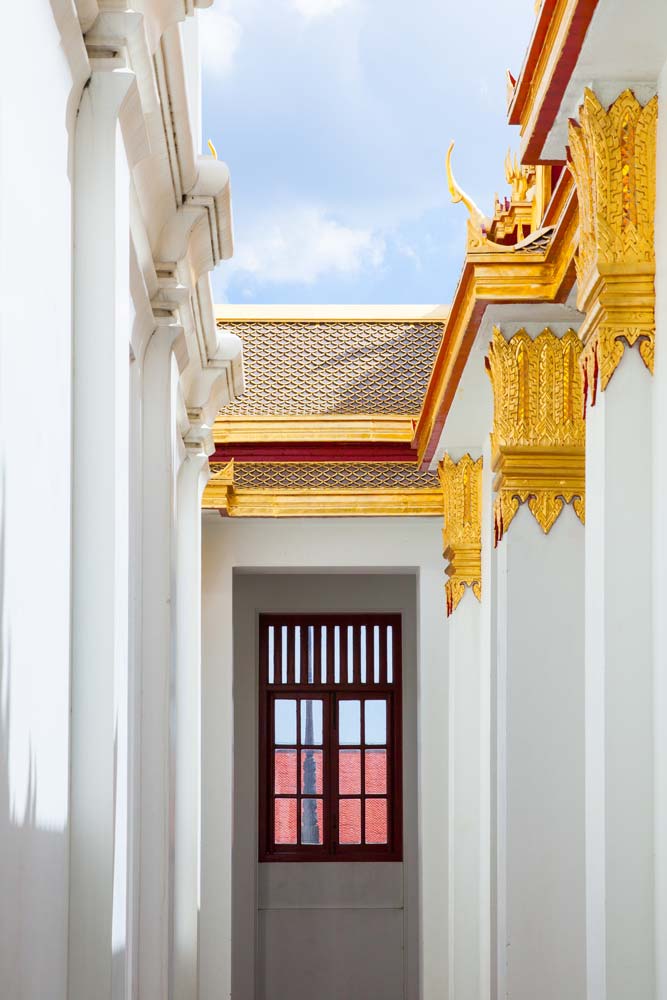
- Look beyond the main entrance — Walk around the building to appreciate the marble columns, roof details, windows and architecture from different angles.
- Bring a camera — The white marble and colourful Thai roof make the temple particularly photogenic.
- Be respectful when taking photographs — Remember that Wat Benchamabophit is an active Buddhist temple. Avoid photographing people who are worshipping without permission.
- Carry some Thai baht — Having cash is useful for the entrance fee and any small purchases nearby.
- Check opening hours before you go — Hours can vary on Sundays, public holidays and during religious ceremonies.
- Use Grab or a taxi if you’re short on time — The temple isn’t directly beside a BTS or MRT station, making direct road transport the easiest option for many visitors.
- Avoid the hottest part of the day — The marble can become extremely bright and reflective around midday, while the heat can make sightseeing uncomfortable.
- Combine it with other Dusit attractions — Its location makes it easy to include the Marble Temple as part of a wider Bangkok sightseeing day.
- Don’t just stop for the famous photo — The architecture and Buddha gallery are what make Wat Benchamabophit worth spending time exploring.
How to visit Wat Benchamabophit FAQ
Wat Benchamabophit is best known as Bangkok’s Marble Temple because its main ubosot (ordination hall) is constructed with Italian Carrara marble. The temple also features a distinctive Thai roof, stained-glass windows and a collection of Buddha images around the cloister.
Yes. Wat Benchamabophit is one of Bangkok’s most distinctive temples and is particularly worthwhile if you enjoy Thai architecture, photography, Buddhist art and history. It is also generally a quieter experience than some of Bangkok’s biggest temple attractions.
The admission fee is currently 100 baht for foreign visitors and free for Thai locals.
The temple is open 8:30 AM to 5:30 PM.
The best time is early in the morning, around 8:00–10:00 AM. This gives you softer light for photographs, cooler temperatures and generally fewer visitors.
Allow around 45 minutes to an hour for a typical visit. If you’re interested in photography or Buddhist art, allow 60–90 minutes so you have time to explore the cloister and its Buddha images.
Dress modestly, with shoulders and knees covered. Avoid sleeveless tops and very short shorts or skirts. You may also need to remove your shoes before entering certain areas of the temple.
The easiest option is usually Grab or taxi, as the temple isn’t directly beside a BTS or MRT station. If you’re using public transport, you can take the BTS to Phaya Thai and continue by taxi; the Tourism Authority of Thailand estimates the taxi journey from Phaya Thai at around 10 minutes.
Yes, photography is one of the highlights of visiting the temple. The symmetrical marble ubosot, stone lions and Buddha gallery provide excellent photo opportunities. However, remember that this is an active religious site and avoid disturbing people who are praying or worshipping.
The main ubosot houses a bronze replica of Phra Buddha Chinnarat, one of Thailand’s most revered Buddha images. The cloister surrounding the building contains 52 Buddha images representing different Buddhist artistic traditions.
Yes. The temple is relatively compact and easy to explore, making it a good addition to a family Bangkok itinerary. Children may particularly enjoy comparing the different Buddha statues around the cloister.
Thanks for reading!
We love living in Bangkok, exploring Thailand and sharing everything we learn along the way. Comment below if you have any questions and follow us along on Instagram or Facebook.
We value and appreciate all our readers and supporters. If you wish to support That Bangkok Life then please use our Amazon affiliate for your next purchase, it doesn’t cost you anything extra but we make a small commission, allowing us to continue building this website and sharing our love of travel with you.