

Looking for vegetarian food in Thailand? We share the must-try dishes, street food tips, and how to eat meat-free while exploring Thai cuisine.
Ordering a vegetarian dish from a menu in a Thai restaurant is one thing. But what vegetarian Thai food is available when you go to Thailand? Whether you are a long-standing vegetarian like or are looking for vegetarian food in Thailand because of food safety concerns, I hope this guide will be helpful.
Vegetarian food in Thailand
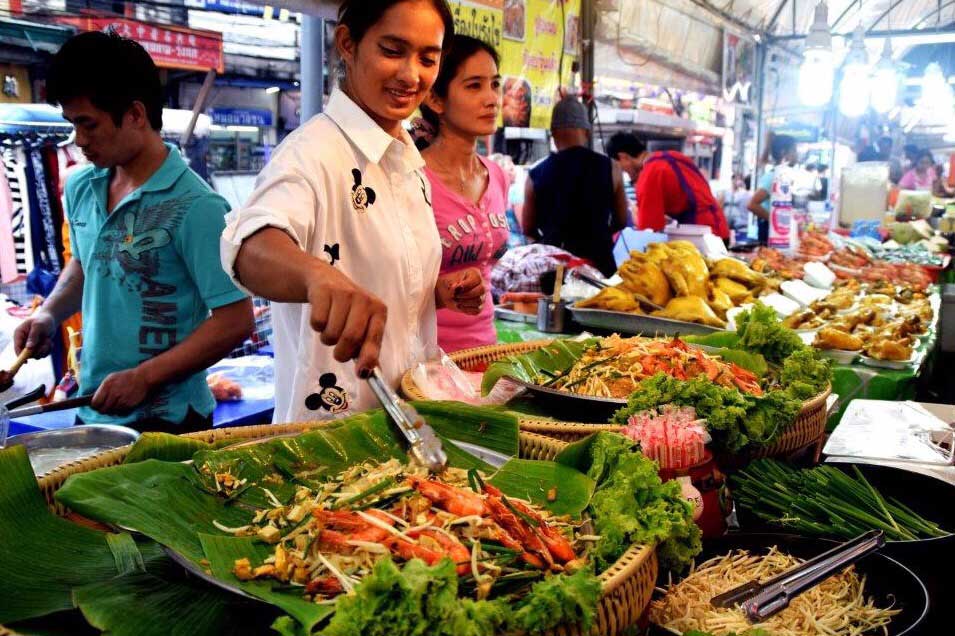
Appetizers
There are salads available at most restaurants I have been to and a surprising number of different soups. Personally, I found it was just way too hot in Thailand to ever have hot soup. But I sure saw some intriguing dishes on the menus. In different areas they included different ingredients but were often based on a coconut soup or broth. I have also seen cucumber or other vegetable soups.
Best Vegetarian Thai dishes
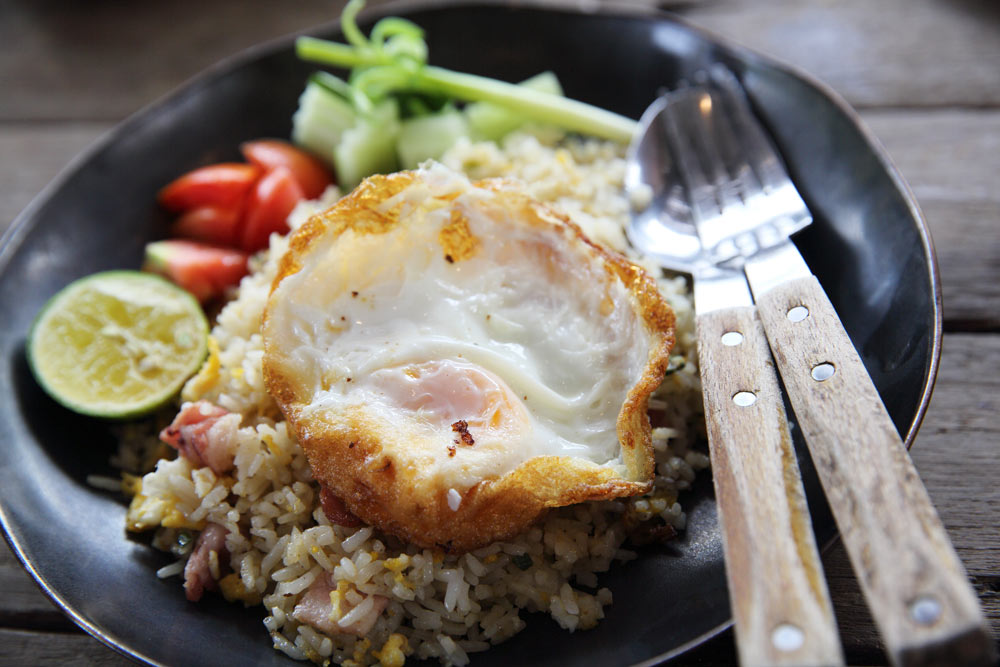
Fried Rice
Vegetarian fried rice was literally my go-to dish during my weeks in Thailand. It’s healthy with fresh vegetables, cheap and available almost anywhere. From the tiny shacks on the side of the street to full service restaurants and I couldn’t even say where it tasted better. Often the chef will add an egg in the rice, so make sure to specify if you are vegan or plant based.
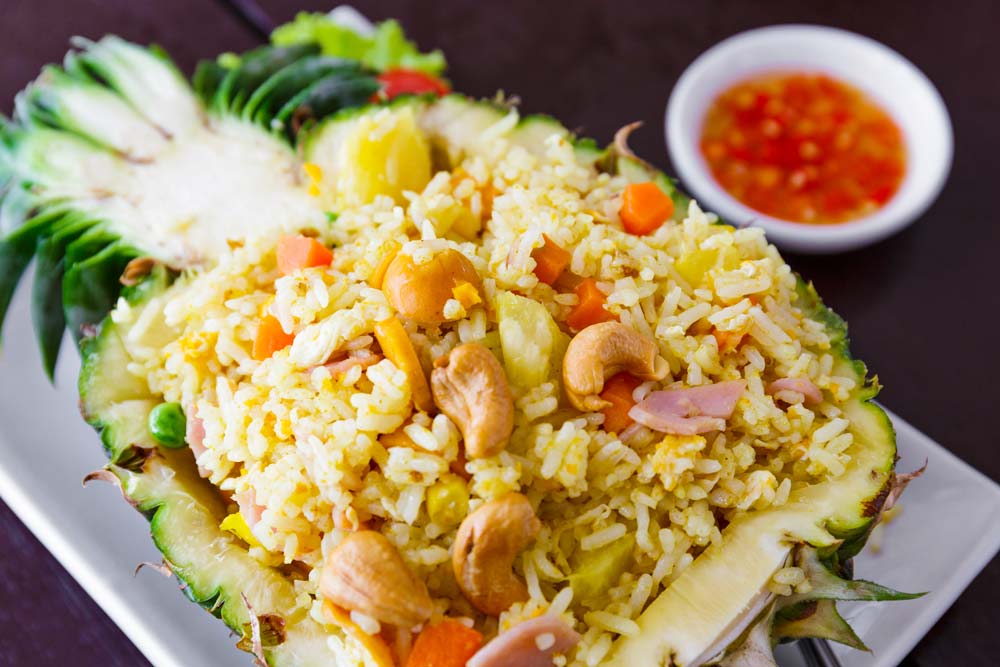
Pineapple Fried Rice
Just like fried rice but better. It’s fried rice with pineapple added, often even served IN a pineapple. If ever you wanted to take an Instagram picture of your Thai food – this is your dish. We love the pineapple rice in Lao Garden, Bangkok.
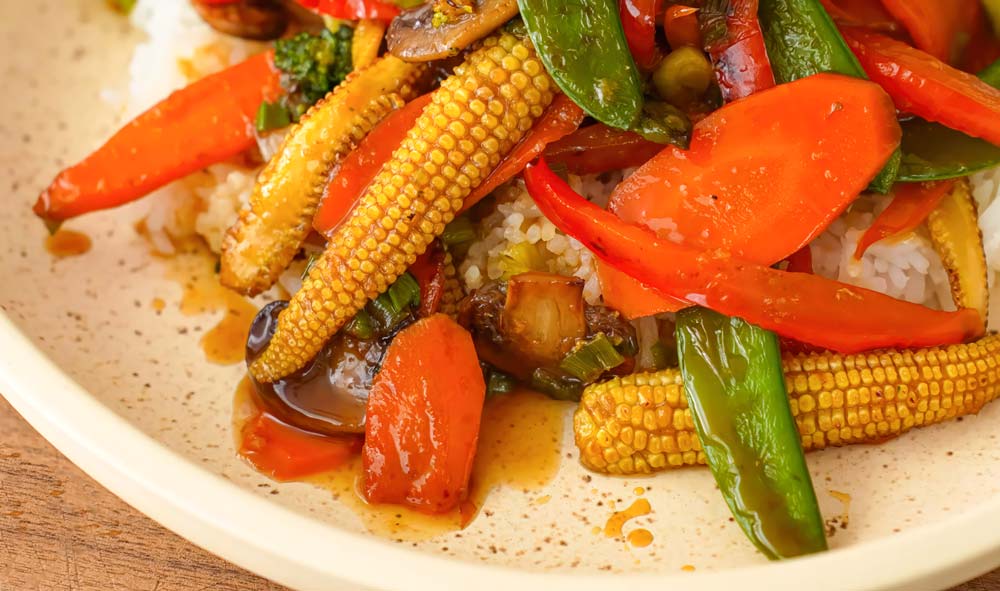
Vegetable Stir Fry
Also, eating vegetarian in Thailand means eating stir fries. Usually, the vegetables are fired in soy sauce. Often the dish includes cashews, which add a lovely flavour and crunch to it. This is what I rewarded myself with after my hike during my day away from the crowds on Kho Phi Phi island.
Coconut Rice
A side dish that tastes like a tropical vacation, coconut rice goes well with vegetable stir fry for example. To make it, rice is boiled in coconut milk and then mixed with shredded coconut meat.
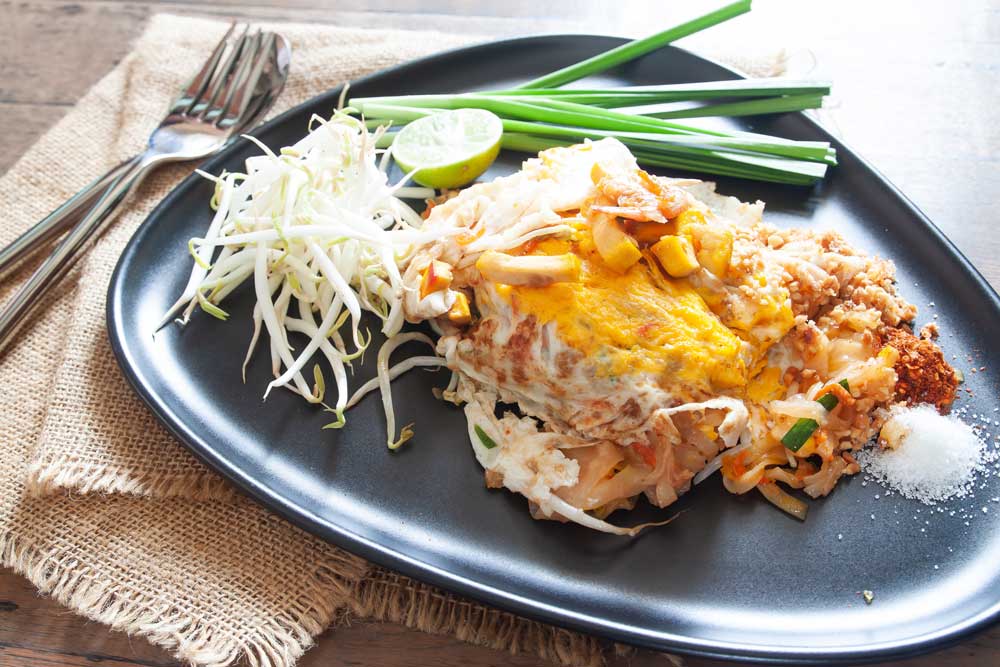
Pad Thai
Pad Thai or Phad Thai is a dish of fried vegetables and rice noodles, sometimes peanuts. Usually, one can add different kinds of meat but the base is vegetarian. This is about as common as fried rice. You can get it in restaurants and as street food. We even had it on a boat during our day trip snorkelling in Thailand.
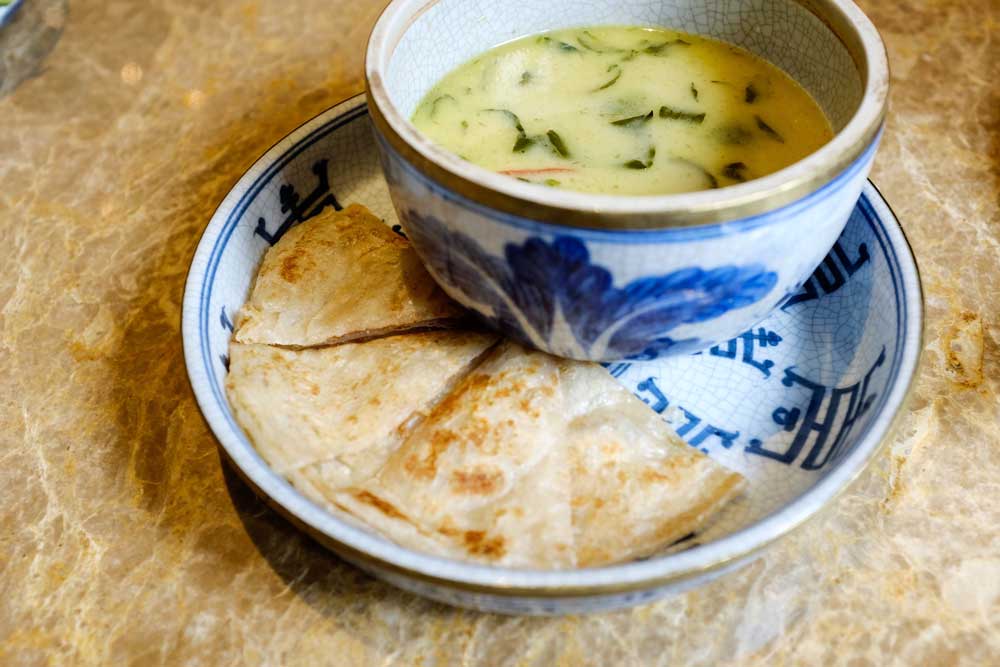
Thai Green Vegetable Curry
We love a Thai green curry and in most restaurants, you can ask for vegetables only. Get some roti and rice on the side for a delicious, filling meal, available across the country. There is a great option in Cabbages and Condoms in Bangkok; you can choose various meats or go for a vegetarian option.
Vegetarian street food in Thailand
This is where it gets tricky. Vegetarian food is available, but street food tends to be fried pieces of meat. The silver lining is that most of the meat frying street food stands I saw also offered tofu. However, it is fried in the same oil as the meat the person before you ordered. That may make a difference to some. But then, in the middle of the night when every restaurant is closed and the only way to eat is street food, you don’t have to starve! This happened to me in Phuket, I was lucky to find anything meat-free that night at all.
Dessert
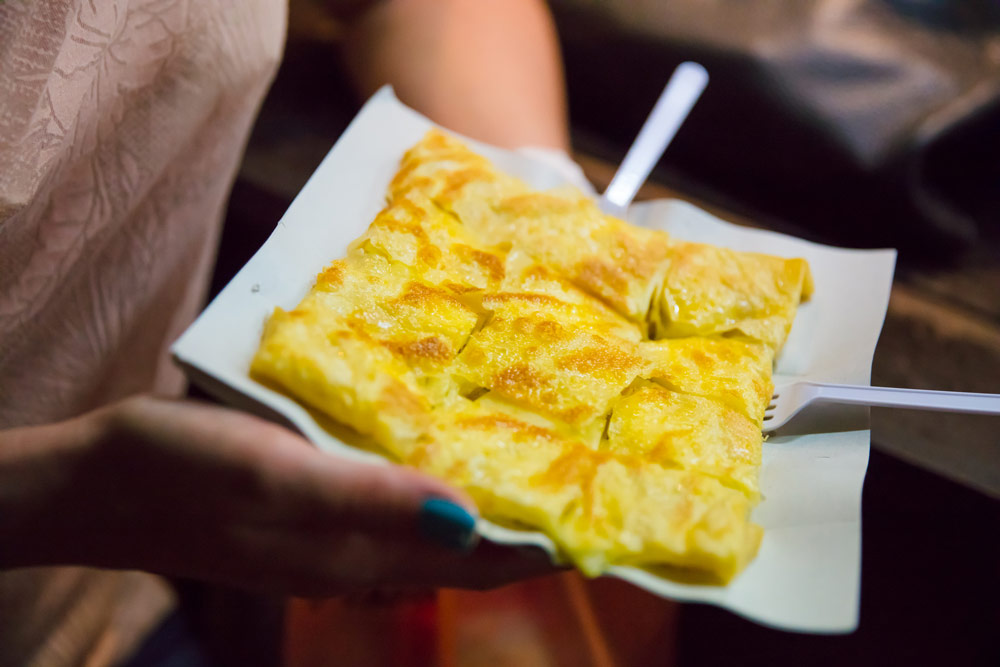
Roti – Thai pancake
Roti is a Thai version of a pancake that I have never had anywhere else before. It’s usually served street food style and you can watch them prepare it. Just try to ignore the heaps of butter they use so you can still enjoy it. There are several vegetarian Roti versions, sweet and savory. But it can also be served with meat. I usually ordered the Thai pancakes filled with fruit.
In Ao Nang’s main street in Krabi there is also a pancake place that makes their pancakes, crepes style, the French way. It may not be authentic Thai food, but delicious they were! And meat-free!
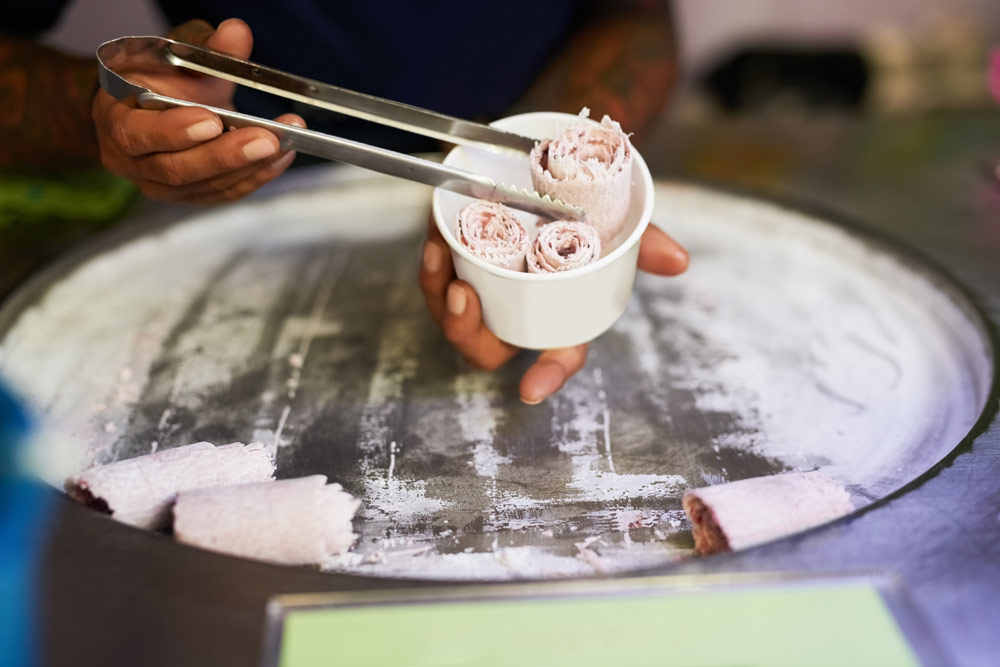
Fried Ice Cream
In the south of China, we enjoyed deep fried ice cream and were thrilled to see it in Thailand too. However, its not exactly the same.
It’s more like ice cream thinly spread out on what looks like a hot surface, when it actually is cold. Eitherway, it is fun to watch the showmanship of how Thai fried ice cream is prepared. You can pick your own toppings, just like you would for frozen yoghurt.
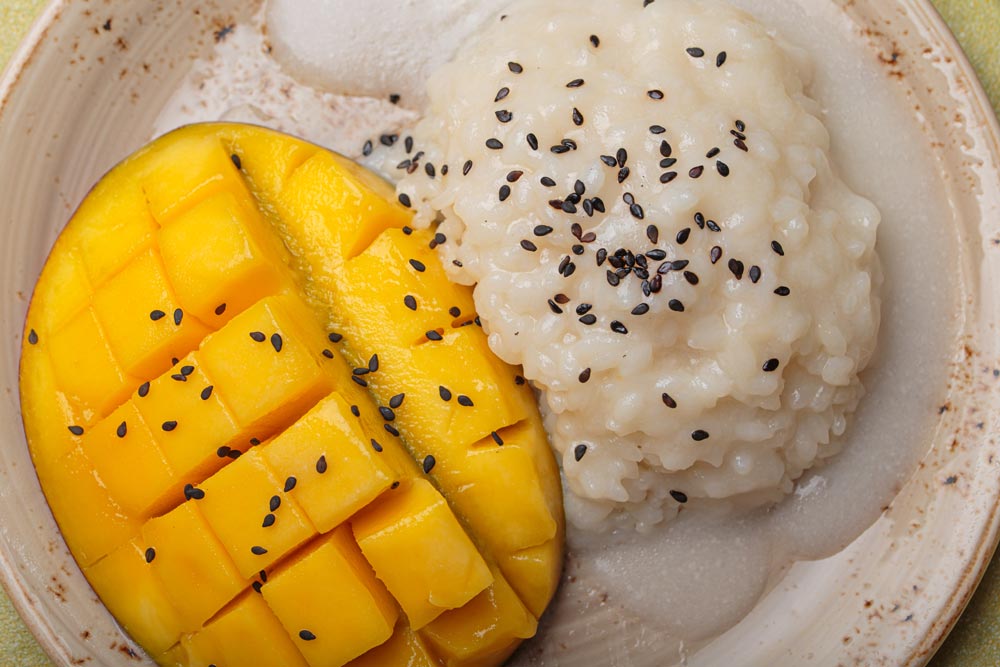
Mango Sticky Rice
Let’s get back to my eye opening mango experience for a moment. A popular dessert in Thailand is mango sticky rice. Don’t judge me, but I cheated and had it for breakfast more than once. Basically it is steamed rice with coconut cream and sugar, served with fresh ripe mango, more coconut cream and crispy sprinkles. Later I found out the crispy sprinkles are mung beans. Anyway, whether you are vegetarian or not, I recommend you try this dish when you are in Thailand!
Snacks
Fruit
That brings me to one of my absolute favorite vegetarian foods in Thailand, vegan actually: All the fresh fruit. I swear, I did not know what mango was supposed to taste like until I had it in Thailand! Besides mango, there are just so many fresh tropical fruits available on the markets it is hard to choose. In the cities I have seen them sold mixed and pre-cut, even with a little wooden skewer, so all you had to do was decide what order to eat them in.
There was dragon fruit, lychee, watermelon – think of whatever tropical fruit, you find a ripe one in Thailand. It’s worth strolling through the markets though instead of buying from the first stand closest to the street. Even if they all sell the same fruits and maybe even the same quality, prices tend to be lower in the far corner of the markets than closest to the street.
If you are looking for vegetarian food in Bangkok, I passionately recommend the Gingerbread House and their mango smoothie! The best I have had in my life! The restaurant is located near the Giant Swing, which may be on your itinerary anyway. It’s a beautifully restored Victorian home, furnished with love and attention to detail. And it’s operated by a local who wants to preserve the house for the community. What a fantastic way to contribute to community tourism in the middle of Bangkok!
Fresh Coconut
At virtually every corner in Thailand you can buy fresh coconut. It’s totally a thing! Prices vary slightly, so it is worth comparing. The color is a pale green and it’s much bigger than what you remember as a coconut because the brown shell with white coconut meat inside is actually in a thick cocoon. That is cut open theatrically with a large knife for you upon order. Then you get a straw to drink the coconut water.
This is a great opportunity for our sustainable traveler to bring their own stainless steel straws so you don’t have to take the plastic ones! Even if my personal observation is that plastic straws are on their way in South East Asia as it is.
Coconut water is naturally clear. This is what you will be drinking when you order a fresh coconut. Coconut milk is made from crushing the coconut meat and extracting the liquid.
How to eat meat-free in Thailand
Eating meat-free in Thailand is easier than it first seems, but it does take a bit of awareness. Thai cuisine uses a lot of fresh vegetables, herbs, noodles, and rice, yet many dishes that appear vegetarian may still include hidden animal products like fish sauce, oyster sauce, or shrimp paste. Learning a few key tips can make all the difference.
Start by looking for restaurants displaying the yellow and red เจ (Jay) symbol, which indicates fully vegan food prepared without meat, seafood, dairy, or strong-smelling vegetables. These spots are especially common during the Vegetarian Festival, but many remain open year-round in cities like Bangkok and Chiang Mai.
When ordering at regular restaurants or street stalls, it’s helpful to clearly communicate your dietary needs. Saying “mai sai neua sat” (no meat) is a good start, but to be stricter, you should also mention no fish sauce (“mai sai nam pla”) and no oyster sauce. Having this written down in Thai or using google translate on your phone can save confusion.
Some Thai dishes are naturally easy to adapt. Options like vegetable pad Thai, tofu green curry, morning glory stir-fry, and fried rice can usually be made vegetarian if you ask. Street food stalls are often flexible, so don’t hesitate to request tofu instead of meat.
If you want a completely hassle-free experience, seek out dedicated vegetarian or vegan restaurants, which are increasingly popular across Thailand. Apps like HappyCow can help you quickly find nearby options.
With a little preparation and confidence when ordering, eating meat-free in Thailand can be not only easy, but one of the highlights of your trip.
Best Vegetarian Restaurants in Bangkok
- Veganerie Ratchathewi: A popular vegan chain serving indulgent plant-based comfort food like burgers, pancakes, and desserts.
- May Veggie Home: A long-standing favourite offering a wide range of vegetarian Thai and international dishes in a relaxed setting.
- May Kaidee Tanao Vegetarian & Vegan Restaurant: A well-known spot for authentic Thai vegan food, also offering fun and affordable cooking classes.
- Mercy Republic: A trendy vegan restaurant with a creative menu blending Thai favourites and Western-style dishes.
- Golden State Vegan Restaurant: A stylish vegan spot specialising in sushi and Japanese-inspired plant-based cuisine.
- Kruaboon Thai: A traditional Thai restaurant serving authentic vegetarian versions of classic local dishes.
- Vegan Pranakhon – Khaosan Road: A fully vegan restaurant near Khao San Road known for bold Thai flavours and beautiful presentation.
- Vegan Mahanakhon: An upscale vegan dining experience offering creative plant-based takes on Thai cuisine.
- BEGAN VEGAN: A casual vegan eatery near the Grand Palace serving simple, hearty, and affordable dishes.
With all these delicious options for vegetarian food in Thailand, I hope you will enjoy your trip. And if you go to an area where they have a meat-free local dish that I am not aware of, I would love to hear about it from you in the comments!
Vegetarian Food in Thailand FAQ
Yes, Thailand is a great destination for vegetarians, with plenty of vegetable-based dishes, tofu options, and dedicated vegan “jay” restaurants, especially in cities like Bangkok and Chiang Mai.
“Jay” (เจ) refers to a strict vegan diet in Thailand that avoids meat, seafood, dairy, and strong-smelling vegetables like garlic and onion. Jay food is widely available at specialised eateries.
Yes, vegetarians can eat Thai street food, but you should always ask for no meat, fish sauce, or oyster sauce, as these are commonly used in many dishes.
Vegetarian-friendly Thai dishes include vegetable pad Thai, tofu green curry, fried rice, papaya salad (som tam without fish sauce), and stir-fried morning glory.
You can say “gin jay” (กินเจ) for vegan or “mangsawirat” (มังสวิรัติ) for vegetarian, but it’s best to clearly specify no fish sauce or meat when ordering.
No, fish sauce is made from fermented fish and is not vegetarian. Always ask for dishes without fish sauce (“mai sai nam pla”).
Yes, there are many vegetarian and vegan restaurants across Thailand, particularly in tourist areas and major cities like Phuket and Bangkok.
The best time is during the Vegetarian Festival (usually in October), when many stalls and restaurants switch to fully vegan menus.
Vegetarian food is fairly easy to find in cities and tourist areas, but it can be more challenging in rural regions without planning.
A big thank you to Christin for this awesome blog post of the best Vegetarian food to eat in Thailand


[…] semi-outdoor markets team with food vendors serving up the distinctive flavours of Thailand, from delicious vegetarian food to classic Thai […]
[…] somewhere that serves good quality vegan and vegetarian food in Bangkok is always one of the biggest concerns for plant-based travelers, as not every destination offers a […]
[…] Som tam is fresh, spicy, and vibrant. Green papaya forms the base. Lime, chilli, and fish sauce create bold flavours. It’s refreshing yet intense. Adjust spice levels if needed; a perfect option for vegetarian food in Thailand. […]