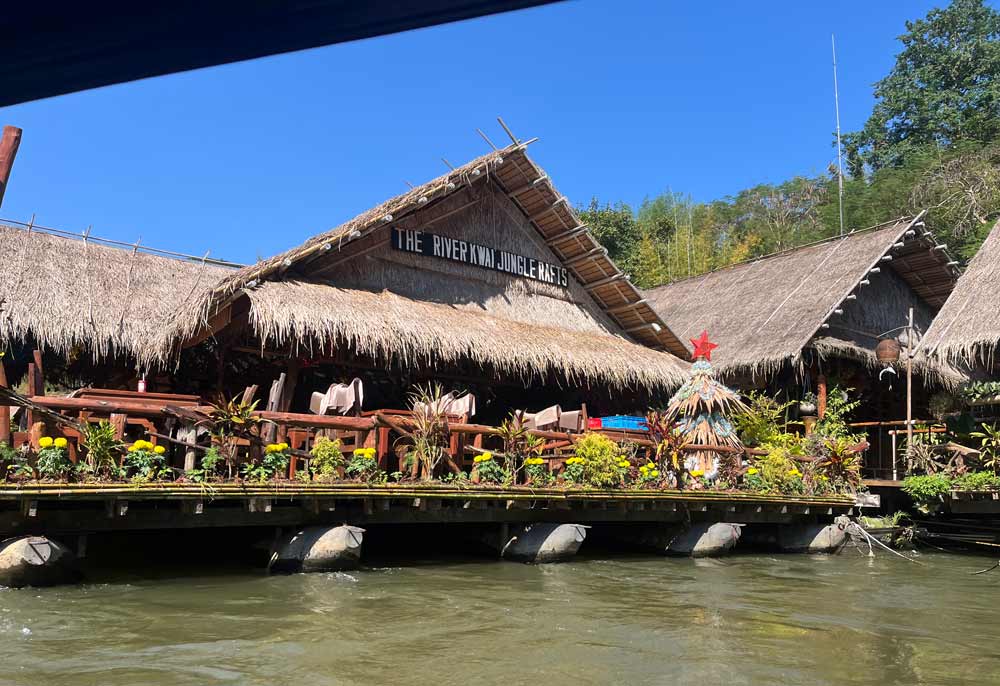

Explore the JEATH War Museum Kanchanaburi and discover the powerful history of the Death Railway. Learn what to expect, visitor tips, and why this moving World War II museum is worth visiting.
Kanchanaburi is one of Thailand’s most historically significant destinations. Travel from Bangkok to Kanchanaburi in just a few hours, the province attracts visitors with its natural beauty, waterfalls, and peaceful riverside scenery. But beneath the calm landscapes lies a deeply emotional chapter of World War II history.
One of the most important places to learn about that history is the JEATH War Museum, one of the best things to do in Kanchanaburi. Located close to the famous Bridge over the River Kwai, this small but powerful museum tells the story of the prisoners of war who were forced to build the infamous Death Railway during the Japanese occupation.
Having visited Kanchanaburi several times while living in Bangkok, I’ve explored many of the area’s historical sites, but the JEATH War Museum remains one of the most haunting and memorable. It’s not a polished, modern museum — in fact, it’s quite the opposite — but that rawness adds to the emotional impact of the experience but can be visited during a day trip from Bangkok.
Here’s everything you need to know about visiting the JEATH War Museum and why it’s an essential stop on any Kanchanaburi itinerary.
JEATH War Museum Kanchanaburi
The History Behind the JEATH War Museum
To understand the museum, you first need to understand the tragic history it represents.
During World War II, the Japanese military constructed a railway between Thailand and Burma (modern-day Myanmar) to support their military campaign in Southeast Asia. This railway, now known as the Death Railway, was built between 1942 and 1943 using forced labor from Allied prisoners of war (POWs) and Asian civilians.
The project became infamous for the horrific conditions endured by the workers. Around 16,000 Allied POWs and up to 100,000 Asian laborers died due to disease, starvation, overwork, and abuse during the construction of the railway.
The name JEATH itself represents the nationalities involved in the railway’s story:
- J – Japan
- E – England
- A – Australia / America
- T – Thailand
- H – Holland (the Netherlands)
These nations represent the captors, prisoners, and countries connected to the construction of the railway.
The museum was founded in 1977 by the chief abbot of Wat Chaichumphon Temple to preserve the history of the railway and honour those who suffered and died during its construction.
Location of the JEATH War Museum
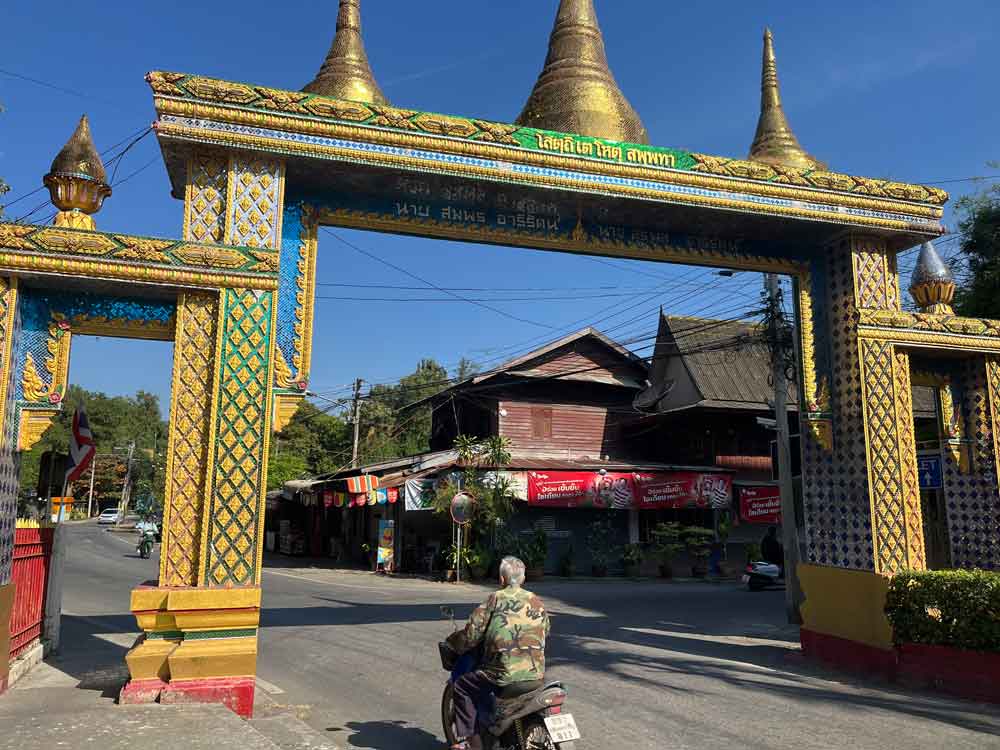
The museum is located on the grounds of Wat Chaichumphon, a temple near the junction of the Khwae Yai and Khwae Noi rivers in Kanchanaburi.
This location is about 4.5 km from the Bridge over the River Kwai, making it easy to visit alongside other historical attractions in the area.
When visiting Kanchanaburi, many travellers combine the JEATH War Museum with:
- Kanchanaburi War Cemetery
- Thailand-Burma Railway Centre
- Hellfire Pass Memorial Museum
Together, these sites help tell the full story of the Death Railway and the suffering experienced during the war.
How to Get to the JEATH War Museum
The JEATH War Museum is located in Wat Chaichumphon Temple, just south of central Kanchanaburi town. It’s easy to reach from most parts of the city and can be combined with other historical attractions in the area.
If you’re travelling from Bangkok, Kanchanaburi is around 130 km west of the capital and takes roughly 2–3 hours to reach.
Getting there from Bangkok
- Train: You can take a train from Thonburi Railway Station to Kanchanaburi Railway Station. The journey takes around 2.5 hours and is one of the most scenic ways to reach the province.
- Bus or Minivan: Buses and minivans depart regularly from Southern Bus Terminal (Sai Tai Mai) in Bangkok and take about 2 hours to reach Kanchanaburi.
- Private car: Driving from Bangkok is straightforward and usually takes around 2 hours, depending on traffic.
Getting to the museum in Kanchanaburi
Once in Kanchanaburi, you can reach the museum by:
- Tuk-tuk
- Taxi
- Bicycle rental
- Motorbike rental
It’s only about 10 minutes from the Bridge over the River Kwai, making it easy to include on a sightseeing day.

Best Time to Visit the JEATH War Museum
The JEATH War Museum is open year-round, but some times are better for visiting than others.
- Morning visits: The best time to visit is early morning, when the museum is quieter and temperatures are cooler. The bamboo structures can get quite warm in the afternoon heat.
- Cooler season: The most comfortable time to visit Kanchanaburi is between November and February, when temperatures are lower and humidity is reduced.
- Weekdays vs weekends: Weekends can be slightly busier due to domestic tourists visiting from Bangkok. If possible, visit on a weekday morning for a more peaceful experience.
Other Historical Attractions in Kanchanaburi
Kanchanaburi is filled with World War II history, and visiting several sites together helps you better understand the story of the Death Railway.
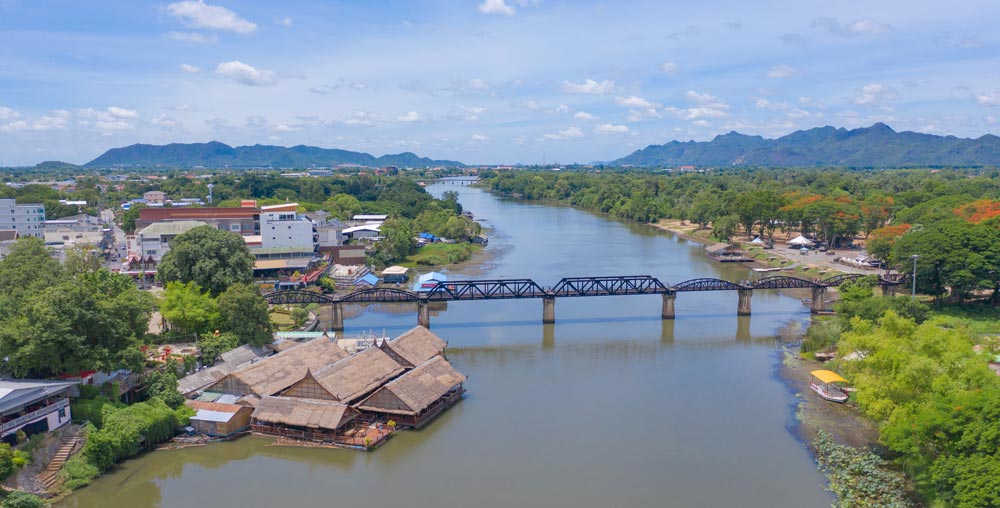
- Bridge over the River Kwai: This famous bridge is one of Thailand’s most recognisable historical landmarks. It formed part of the Thailand–Burma Railway and is now a popular attraction where visitors can walk across the original railway structure. There are some great restaurants in Kanchanaburi along the River Kwai, perfect to spend a relaxing afternoon after seeing the sights.
- Thailand–Burma Railway Centre: This is one of the most modern and informative museums in Kanchanaburi. The exhibits provide detailed explanations of how the railway was constructed and the conditions faced by prisoners of war.
- Kanchanaburi War Cemetery: Located near the railway station, this cemetery is the resting place of nearly 7,000 Allied prisoners of war who died while building the railway.
- Hellfire Pass Memorial Museum: Located about 80 km north of Kanchanaburi, this memorial marks one of the most difficult sections of the railway where prisoners carved a passage through solid rock.

What to Expect When Visiting
Unlike many modern museums, the JEATH War Museum is simple and rustic.
In fact, that’s part of the experience.
The main structure is designed to resemble the bamboo prison huts where POWs were forced to live. The thatched-roof buildings recreate the cramped conditions prisoners endured during the railway’s construction.
Inside the museum, visitors will find:
- Original photographs taken during the war
- Drawings and paintings created by former prisoners
- Maps showing the railway route
- Personal belongings from POWs
- Tools used to build the railway
- Weapons and military artifacts
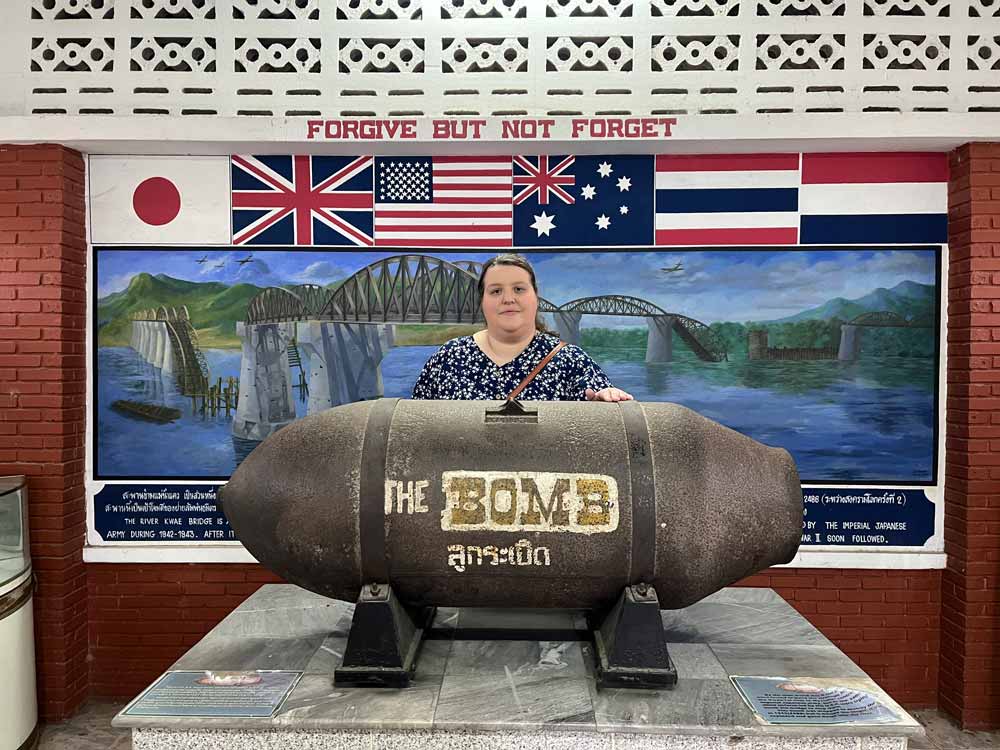
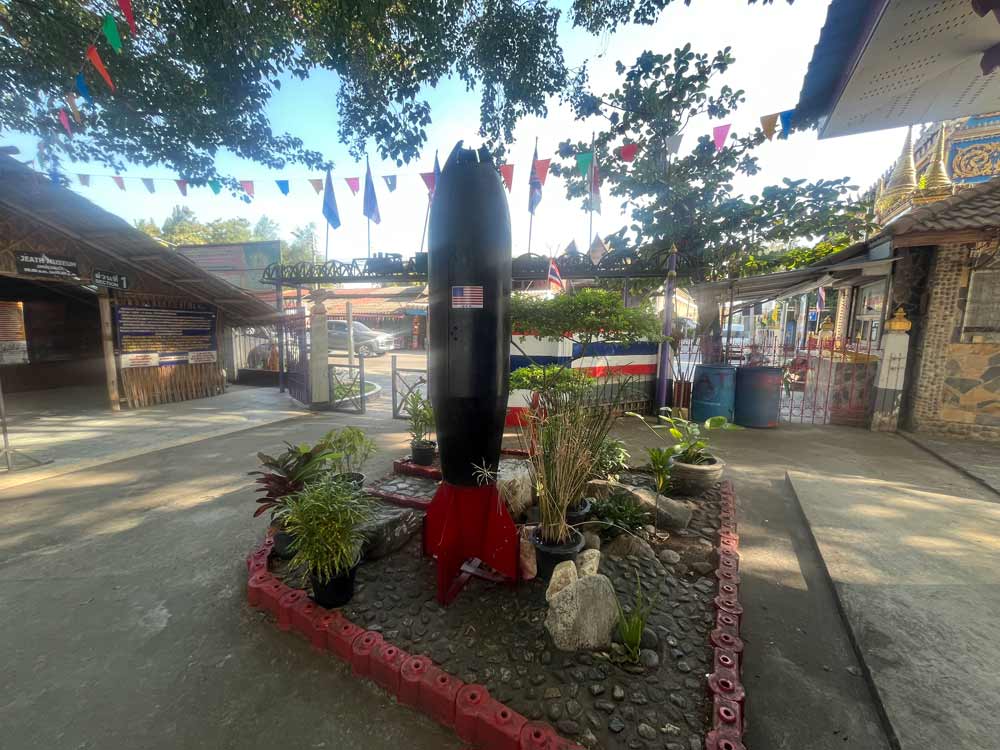
- A large unexploded Allied bomb displayed outside the museum
One gallery even recreates the bamboo bunk beds used by prisoners, helping visitors understand how cramped and uncomfortable their living conditions were.
Some of the photos and artwork are extremely graphic, showing emaciated prisoners suffering from disease and starvation. These images make the museum a powerful and sometimes emotional experience.
The Atmosphere of the Museum
One of the most striking things about the JEATH War Museum is how raw and unpolished it feels.
Unlike the nearby Thailand-Burma Railway Centre — which is a modern, professionally curated museum — JEATH feels more like a historical memorial assembled over time.
The displays include handwritten captions, faded photographs, and donated items from former POWs. Some of the materials are old and worn, but that authenticity actually makes the experience feel more personal.
You’re not just looking at history behind glass — you’re seeing the real artifacts and stories left behind by people who survived the camps.
In many ways, the museum feels less like a tourist attraction and more like a place of remembrance.
Stories of the Prisoners
One of the most powerful parts of the museum is the artwork created by prisoners who survived the camps.
Many POWs secretly drew sketches and paintings depicting life inside the prison camps. These images provide an incredibly personal glimpse into what daily life was like during the railway’s construction.
Some drawings show prisoners working long hours under the hot tropical sun, while others show sick men lying on bamboo beds suffering from diseases like malaria and cholera.
One particularly haunting image reportedly depicts a prisoner requesting the food ration of another prisoner who had died beside him — a stark reminder of the extreme hunger and desperation inside the camps.
These artworks are among the most moving exhibits in the museum.

Visiting Information
If you’re planning to visit the museum, here are the basic details:
| Opening hours: | Typically 8:30 AM – 4:30 PM daily. |
| Entrance fee: | Around 30–50 THB depending on the visitor. |
| Location: | Inside Wat Chaichumphon Temple, south of central Kanchanaburi. |
Is the JEATH War Museum Kanchanaburi Worth Visiting?
Some travellers are surprised by how basic the museum is compared to modern museums. But in many ways, that simplicity is part of its character.
The JEATH War Museum was one of the first museums in Kanchanaburi dedicated to the Death Railway, and it remains an important historical site.
While the exhibits may feel a little dated, the emotional impact is still very powerful.
For visitors interested in history, it offers a direct and honest look at one of the darkest chapters of World War II in Southeast Asia.
Tips for Visiting
If you’re planning a visit, here are a few tips to make the most of your trip:
- Visit early in the day
The museum can get hot, especially inside the bamboo structures. If you are staying the night, consider Kanchanaburi City hotel, a great value, decent hotel located right by the Bridge Over the River Kwai.
- Combine it with nearby attractions
Pair your visit with the Bridge over the River Kwai, the railway museum, or the war cemetery. We love the Goodway Restaurant along the river, it’s the perfect way to relax and unwind.
- Prepare for emotional content
Some of the photographs and stories are difficult to see.
- Take your time
Although the museum is small, the exhibits deserve careful attention.
Kanchanaburi is often known for its waterfalls, jungle scenery, and peaceful river views. But its most important role in history is tied to the tragedy of the Death Railway. The JEATH War Museum may not be the most polished museum in Thailand, but it remains one of the most powerful. Walking through the bamboo huts, looking at the photographs of starving prisoners, and reading the stories of survival and loss is a sobering reminder of the cost of war. For anyone visiting Kanchanaburi — especially those interested in World War II history — the JEATH War Museum is an important and deeply moving place to visit.
Thanks for reading!
We love living in Bangkok, exploring Thailand and sharing everything we learn along the way. Comment below if you have any questions and follow us along on Instagram or Facebook.
We value and appreciate all our readers and supporters. If you wish to support That Bangkok Life then please use our Amazon affiliate for your next purchase, it doesn’t cost you anything extra but we make a small commission, allowing us to continue building this website and sharing our love of travel with you.