

Discover the real cost of living in Bangkok for expats in 2026, including rent, food, transport, healthcare, and lifestyle costs.
Over the past ten years, Bangkok has been among the most appealing cities in Asia to expatriates and digital nomads. Low cost of living, great cuisine, trusted infrastructure, and a lively urban style have made it a natural destination for remote workers and long-term foreigners. Over the past few years, though, the question of whether Bangkok remains affordable or the value proposition has fundamentally shifted has become a pressing issue because of the growing rents, inflation, and competition of the city as a nomadic destination.
When it comes to lifestyle expenses and entertainment expenditures, the terms and platform Longfu 88 are more frequently used alongside broader discussions of how expats and nomads spend their tradable income in contemporary Bangkok.
Is Bangkok still cheap?
Bangkok is no longer as cheap as it was, but it remains much cheaper than most Western capitals and many other competitors in the region. The increase in the cost of living has not been uniform but skewed. Basic needs such as food, transport, and essential services are relatively low, while housing- and lifestyle-oriented costs have grown the most.
Thailand has not been as fortunate, as it has experienced inflation at a slower rate than most Western economies. This has helped maintain Bangkok’s relative affordability despite rising absolute prices. Expats who receive foreign- or distance-based revenue continue to have high purchasing power in the city, but budgeting is now more deliberate than it was five or ten years ago.
Note: All prices are in Thai Baht (THB) and reflect 2026 averages where possible. Bangkok remains affordable compared with many Western capitals, but costs are rising year by year — especially in desirable expat areas.
Cost of Living in Bangkok

Rent and Housing: The Biggest Shift
One of the biggest cost variables is where you live. Even within Bangkok, the difference between one neighborhood and another can mean thousands of baht in monthly savings — or spending.
Most obviously, affordability issues are evident in housing. Rent hikes in popular neighborhoods along the BTS and MRT lines have been consistent due to renewed demand from expats returning, digital nomads, and foreign workers. Condos with one-bedroom apartments in the central areas cost more than they would have cost a couple of years ago.
That said, the housing market in Bangkok remains lax. By changing a couple of stations without leaving the major hubs, rent can be cut significantly without compromising quality. Even old buildings that have been well-preserved, low-rise apartments, and new neighborhoods are still good. Long-term residents who do not focus on address prestige will still find Bangkok much cheaper than such cities as Singapore, Hong Kong, or Tokyo.
Sukhumvit – Asoke to Thonglor
This is Bangkok’s expat epicenter and is often referred to as one the best places to live in Bangkok. With easy BTS access, shopping malls, cafés, bars and international supermarkets, Sukhumvit is a magnet for foreigners.
- Pros: Convenience, nightlife, international eateries, great transport links.
- Cons: Highest rental prices in the city.
- Typical rent (studio/1-bed): 20,000–40,000 THB/month
- 2-bed or larger: 35,000–70,000+ THB/month
Expect pricey coffee and restaurant bills too — but also the comfort of English-friendly services.
Ari & Phaya Thai
Slightly quieter but still central. A growing expat hub with great cafes, local markets and more space for your money.
- Studio/1-bed: 15,000–28,000 THB
- 2-bed: 28,000–50,000 THB
Ari has a strong digital-nomad vibe with coworking spaces scattered throughout.
Riverside
Luxury apartments with views of the Chao Phraya River. Expat favorite if you want a view and don’t mind paying for it.
- 1-bed: 30,000–60,000+ THB
- 2-bed: 50,000–100,000+ THB
Plus, you’re next to scenic riverside walks and weekend markets.
Bang Na & On Nut
More affordable expat options — especially for long-term residents or families.
- Studio/1-bed: 12,000–20,000 THB
- 2-bed & bigger: 20,000–45,000 THB
Lower rent comes with decent BTS access plus big shopping malls like Central Bangna.
Old Town & Cultural Areas (Phra Nakhon)
Closer to temples and heritage sites. Often more local Thai expat mix, charming streets and lower rents.
- Studio/1-bed: 10,000–18,000 THB
- 2-bed: 18,000–35,000 THB
Traffic here can be trickier and BTS connectivity is limited, but cost savings are real.

Transport Costs
Bangkok traffic is legendary — but the city’s transit systems are fast, clean, and affordable if you use them well. Transportation costs in Bangkok are not high. The transport system is well-developed, modern, and not expensive, making getting around Bangkok a breeze.
Ride-hailing services and taxis remain affordable, with prices slightly up; know how to use Grab will help you get around with ease too. The cost of living in Bangkok is relatively affordable without a car, which greatly helps reduce monthly expenses compared with cities where people must own cars to get around.
BTS / MRT
- Single ride: 16–59 THB (depending on distance)
- Monthly BTS pass: ~1,000–2,000 THB
Motorbike Taxis & Taxis
- Motorbike taxi short hop: 30–60 THB
- Meter taxi start: ~35 THB (+ per km)
- Grab rides vary but are generally reasonable during non-peak hours.
Owning a Vehicle
- Scooter lease: ~2,000–3,000 THB/month (plus petrol)
- Car lease: 8,000–15,000 THB/month (plus petrol & parking)
Parking and congestion charges make car life expensive — most expats stick to BTS, motorcycles, or Grab.
Utilities, Internet, and Daily Essentials
Electricity in Bangkok remains relatively affordable by international standards, even with regular air-conditioning use. A one-bedroom apartment typically sees electricity bills of around 1,000–2,000 THB per month, rising to 3,000–4,000 THB during the hottest months if air-con is used daily. Water is inexpensive, often costing just 300–600 THB per month, making utilities one of the more manageable living expenses for expats.
Bangkok’s reliable and fast internet is a major reason the city continues to attract digital nomads and remote workers. High-speed fiber internet usually costs 600–900 THB per month, with speeds more than sufficient for video calls and large file uploads. Mobile data is also extremely affordable, with unlimited or high-data SIM plans available for 300–500 THB per month, significantly cheaper than rates in Europe, North America, or Australia.
Daily essentials are equally budget-friendly, particularly when shopping locally. Fresh produce from markets is inexpensive, with fruit and vegetables often costing 30–60 THB per item, while staples like rice, eggs, and cooking oils remain low-cost. A typical weekly grocery shop focused on local brands may total 500–1,000 THB, whereas imported products such as cheese, wine, or cereals can quickly double that amount. Expats who adapt to local brands and markets generally enjoy far lower monthly living costs than those who rely heavily on imported goods.
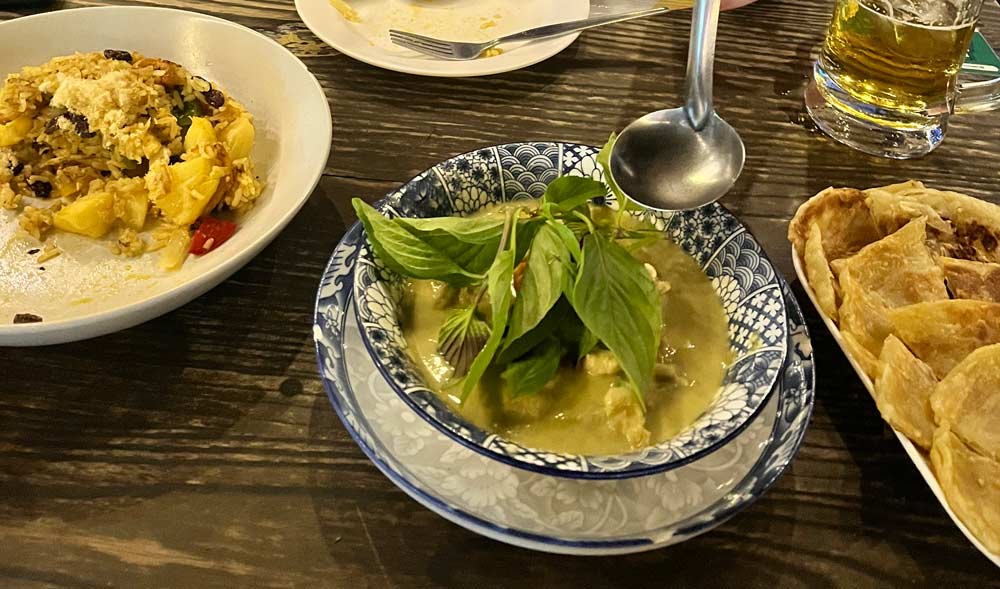
Cost of food in Bangkok
Food remains one of Bangkok’s biggest advantages for expats, offering exceptional quality at prices that are still dramatically lower than in Europe or North America. Street food, food courts, and local restaurants provide filling, flavorful meals for just a few dollars, making it easy to eat well without spending much; we particularly enjoy exploring the best seafood restaurants in Bangkok.
Typical local food prices include:
- Street food meals (pad thai, rice & curry, noodle soups): 40–80 THB
- Food court dishes in malls: 60–120 THB
- Local restaurant meals with a drink: 100–180 THB
- Fresh fruit or smoothie from a street vendor: 40–80 THB
Eating this way regularly keeps monthly food costs very low while still enjoying variety and quality.
However, lifestyle inflation is real in Bangkok — especially for expats. The city now has an abundance of specialty coffee shops, international restaurants, and Western-style brunch spots that cater directly to foreign tastes. While these options are still cheaper than their Western equivalents, they can quickly increase food spending if enjoyed often.
More “expat-style” food pricing looks like:
- Specialty coffee or latte: 120–180 THB
- Western brunch (eggs, coffee, juice): 300–500 THB
- Casual international restaurant meal: 250–500 THB
- Dinner and drinks at a trendy venue: 600–1,000+ THB
Bangkok remains a very affordable city for food — but only if eating out is treated as nourishment rather than a lifestyle event. Expats who balance local meals with occasional Western treats can comfortably keep food costs low while still enjoying everything the city has to offer.
Healthcare and Insurance
Healthcare is a major consideration for expats living in Bangkok, and it remains one of the city’s strongest advantages. Private hospitals and clinics offer high standards of care, modern facilities, and English-speaking doctors — often at a fraction of the cost found in Western countries. Even without insurance, many routine medical services remain surprisingly affordable.
Typical healthcare costs in Bangkok include:
- GP or clinic consultation: 300–800 THB
- Specialist appointment: 800–1,500 THB
- Basic blood tests or lab work: 400–2,000 THB
- Dental cleaning or check-up: 800–1,500 THB
- Minor treatments or prescriptions: often hundreds, not thousands, of baht
Because of this, many expats choose to pay out-of-pocket for everyday medical needs while reserving insurance for major events or hospital stays.
That said, the cost of comprehensive international health insurance has risen globally, and long-term expats increasingly factor insurance into their monthly or annual budgets. Depending on age, coverage, and provider, international health insurance plans typically range from 60,000 to 200,000+ THB per year. While this is not insignificant, it still offers peace of mind when compared with the potential cost of serious illness or emergency treatment abroad.
Even with rising insurance premiums, Bangkok remains highly competitive in terms of medical costs and care quality. World-class hospitals, quick access to specialists, and affordable routine treatment are key reasons many expats choose to stay in Thailand long-term, despite increases in other living expenses.

Monthly Lifestyle & Recreation
Bangkok isn’t just about survival — it’s about living well. Here’s what fun costs. Lifestyle spending is where the affordability is subjective. Bangkok provides infinite possibilities to spend more, both in nightlife and entertainment, as well as in luxury malls, rooftop bars in Bangkok, and travel. Expats who indulge in the city’s high-end products can incur expenses comparable to those in other major cities.
Coffee & Coworking
- Café latte: 90–160 THB
- Specialty coffee shop: 120–200 THB
- Coworking pass (day): 200–400 THB
- Monthly coworking membership: 2,000–5,000+ THB
Fitness & Wellness
- Gym membership: 1,000–2,200 THB/month
- Yoga class: 350–600 THB per session
- Muay Thai gym: 3,000–6,000 THB/month
Nightlife
- Beer at bar: 120–180 THB
- Cocktail at rooftop: 300–600+ THB
- Live music / cover charge: 200–500 THB
Bangkok’s nightlife puts most Western cities to shame — and it’s often cheaper.
Bangkok Cost of Living Summary (Expat Monthly Averages)
| Expense Category | Typical Monthly Cost (THB) |
|---|---|
| Rent (1-bed, central areas) | 20,000 – 40,000 |
| Rent (1-bed, outer areas) | 12,000 – 20,000 |
| Electricity | 1,000 – 4,000 |
| Water | 300 – 600 |
| High-speed Internet (fiber) | 600 – 900 |
| Mobile data / SIM plan | 300 – 500 |
| Groceries (local-focused) | 2,000 – 4,000 |
| Eating out – local food | 3,000 – 6,000 |
| Eating out – Western & cafés | 6,000 – 12,000 |
| Transport (BTS, MRT, taxis) | 1,000 – 2,500 |
| Coffee & casual social spending | 2,000 – 4,000 |
| Gym / fitness / wellness | 1,000 – 3,000 |
| Healthcare (out-of-pocket average) | 1,000 – 3,000 |
| Health insurance (monthly equivalent) | 5,000 – 16,000 |
| Miscellaneous & personal care | 2,000 – 4,000 |
Estimated Total Monthly Cost
- Budget expat lifestyle: 30,000 – 40,000 THB
- Comfortable mid-range lifestyle: 45,000 – 65,000 THB
- Upscale expat lifestyle: 80,000+ THB

Cost of Living in Bangkok FAQ
Bangkok is generally affordable for expats compared to cities in Europe, North America, and Australia. While costs have increased in recent years — especially for rent and imported goods — most expats find they can live comfortably for 40,000–65,000 THB per month, depending on lifestyle and location.
A single expat can expect the following monthly costs:
– Budget lifestyle: 30,000–40,000 THB
– Comfortable mid-range lifestyle: 45,000–65,000 THB
– Upscale or luxury lifestyle: 80,000+ THB
Families and expats with children in international schools should budget significantly more.
Rental costs depend heavily on location:
– Central areas (Sukhumvit, Sathorn): 20,000–40,000 THB for a one-bedroom
– Outer areas (On Nut, Bang Na): 12,000–20,000 THB for a one-bedroom
Long-term leases (6–12 months) often allow for negotiation.
Yes — food is one of Bangkok’s biggest advantages.
– Local meals and street food cost 40–100 THB
– Food court meals average 60–120 THB
– Western or international meals range from 250–500+ THB
Expats who eat local regularly can keep food costs very low.
Groceries are affordable when buying local products:
– Local-focused grocery spend: 2,000–4,000 THB per month
– Imported items (cheese, wine, cereals) are significantly more expensive
Shopping at local markets instead of expat supermarkets can halve grocery costs.
While not always mandatory, health insurance is strongly recommended.
International insurance plans typically cost 60,000–200,000+ THB per year
Many expats combine insurance for emergencies with out-of-pocket payments for everyday care.
Commonly overlooked costs include:
– Higher electricity bills from air-conditioning
– Imported food and alcohol
– Social spending (coffee, brunch, nightlife)
– Visa-related fees and renewals
Thanks for reading!
We love living in Bangkok, exploring Thailand and sharing everything we learn along the way. Comment below if you have any questions and follow us along on Instagram or Facebook.
We value and appreciate all our readers and supporters. If you wish to support That Bangkok Life then please use our Amazon affiliate for your next purchase, it doesn’t cost you anything extra but we make a small commission, allowing us to continue building this website and sharing our love of travel with you.


