

Visiting the best temples in Bangkok is a challenge; there are so many to choose from. We condensed our top 10 Bangkok temples to help you plan your trip.
Bangkok is threaded with temples (wats) that range from small neighborhood shrines to world-famous masterpieces of architecture and devotion. After living here since 2019, we have visited our fair share but no, we still haven’t managed them all just yet. However, we do think we have visited the best temples in Bangkok, so you have plenty to choose from.
Some are free or low-cost; some (especially the monuments inside the Grand Palace complex) charge higher entry fees. Below are the temples I’d prioritize on a first trip (and most repeat-visitors still return to).
Best Temples in Bangkok
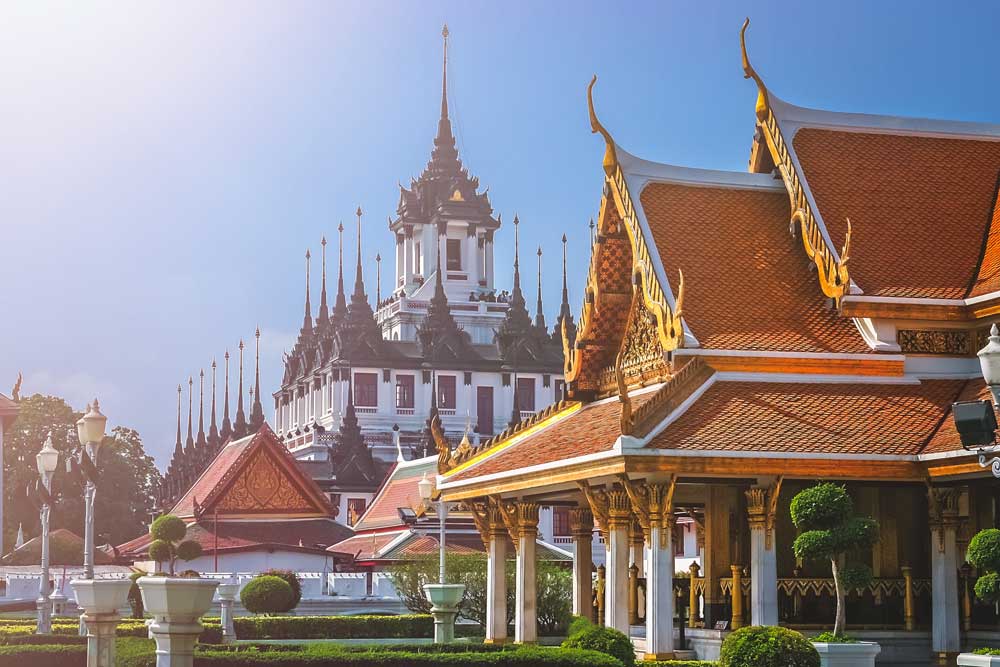
1) Wat Phra Kaew (Temple of the Emerald Buddha) — inside The Grand Palace
This is Thailand’s most sacred site: the tiny, intensely revered Emerald Buddha sits in an ornate chapel when visiting the Grand Palace. Even if you’re not deeply religious, the jewel-like craftsmanship, murals and palace architecture are unforgettable. Just remember, you aren’t permitted to take photographs of the Emerald Buddha itself and will need to remove your shoes before entering.
How to get there:
- Public transport + short walk: Take the BTS to Saphan Taksin (S6), then catch the Chao Phraya Express Boat (Orange/Orange-White flags) to Tha Chang (Ratchawong / Tha Chang) pier — the Grand Palace/Wat Phra Kaew are a short walk from the pier. This is the scenic, low-stress way and avoids traffic.
- Alternate (taxi / tuk-tuk / rideshare): Door-to-door by taxi, Grab or Bolt is convenient, especially if you’re coming from farther away or have mobility needs. Watch for traffic and allow extra time; drop-off is typically on Na Phra Lan Road.
Entrance cost & hours
- Typical fee: 500 THB for foreigners (this ticket covers entry to the Grand Palace and the Temple of the Emerald Buddha). Tickets are sold in the morning until mid-afternoon and the complex is usually open daily (check official schedule before you go).
- Thai nationals enter free with ID. Because prices/policies can be updated, always check the official Grand Palace site or a current tourism site on the day you plan to visit.
Visiting Wat Phra Kaew tips
- Strict dress code: knees and shoulders covered (no shorts, short skirts, or sleeveless tops). You may be refused entry if improperly dressed. If in doubt, bring a scarf or sarong.
- Arrive early (opening time) to avoid crowds and heat; late morning and afternoon can be very busy. Allow 2–3 hours for the palace and Emerald Buddha, but get there before opening if you only have 2 days in Bangkok.

2) Wat Pho (Temple of the Reclining Buddha)
Home to the massive reclining Buddha (46 m long) and one of the oldest temples in Bangkok, Wat Pho is also the historic centre of Thai traditional massage and a must in your Bangkok itinerary. Visiting Wat Pho offers a huge gilded Buddha and intricately decorated stupas make it a must-see and one of the very best temples in Bangkok; my personal favorite.
How to get there:
- Walk from the Grand Palace / Tha Tien pier: Wat Pho sits directly adjacent to the Grand Palace/Wat Phra Kaew area. If you arrive at Tha Tien pier (Chao Phraya Express Boat), it’s a short walk up the riverside and across to the temple grounds — perfect to combine with the Grand Palace.
- Alternate: taxi or tuk-tuk to Tha Tien / Sanam Chai: A quick taxi or tuk-tuk ride from central Rattanakosin (old city) will drop you at the main entrance; this is useful if you’re arriving from elsewhere in the city.
Entrance cost & hours
- Typical fee: 300 THB for foreign visitors but watch for official updates on Wat Pho’s website before you go. Children under certain heights may be free.
Visiting Wat Pho Tips
- Wat Pho also runs a traditional Thai massage school — booking a massage on-site is a great cultural experience. If you want the statue photographs with fewer people, go early morning or later afternoon. Dress respectfully (shoulders and knees covered).

3) Wat Arun (The Temple of Dawn)
Visiting Wat Arun is a must on your Bangkok bucket list and one of the most beautiful places to explore in the city.
The riverside spire (central prang) covered in porcelain pieces is one of Bangkok’s most photogenic landmarks — especially at sunrise or sunset when the light catches the prang’s mosaic. You can climb partway up the steep central prang for fine views of the Chao Phraya and the old city at one of the most picturesque best temples in Bangkok.
How to get there:
- Public transport + ferry: Take the Chao Phraya Express Boat to Tha Tien pier and cross the river by small ferry to Wat Arun (it’s a short, cheap crossing). This is the classic approach and gives you great riverside views.
- Alternate: taxi to Wang Doem or Arun Amarin roads: Taxis can drop you near the river on the Thonburi side; from certain viewpoints you can get dramatic photos of the temple from across the river (for example from bars/terraces at sunset).
Entrance cost & hours
- Typical fee: 200B for foreign visitors, Thai nationals are free.
Visiting Wat Arun tips
- Best at sunrise or sunset; mid-day can be very hot. The climb is steep — if you have mobility limits, admire from the riverside instead. Dress code applies (shoulders/knees covered).
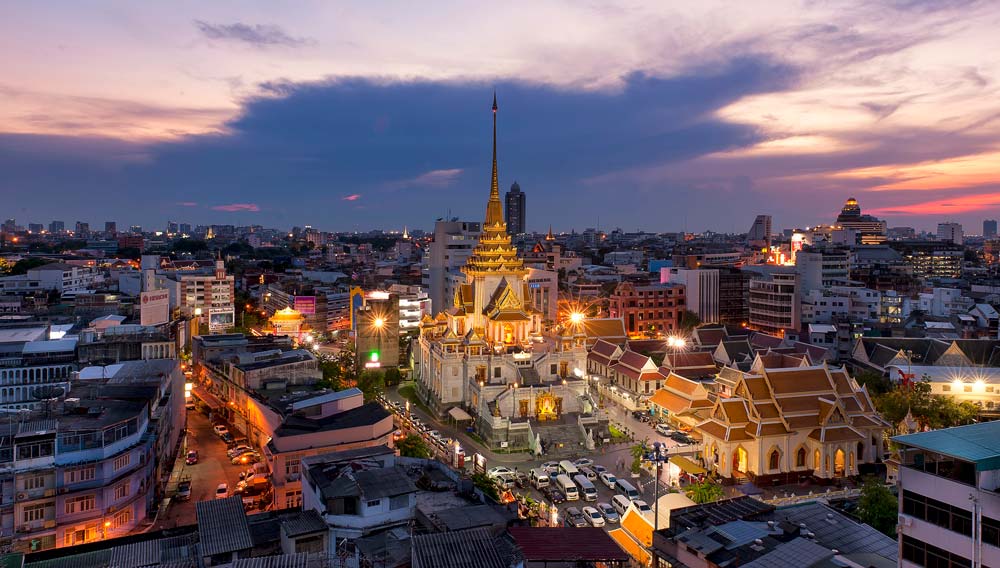
4) Wat Traimit (Temple of the Golden Buddha)
This temple houses the world’s largest solid-gold Buddha (a nearly 3-meter statue weighing several tonnes). The statue’s plain-looking exterior belies its incredible value and craftsmanship.
Located in Chinatown, we recommend combining this visit with a food tour of Yaowarat; it’s a great half-day pairing. The museum surrounding the statue explains the Buddha’s discovery (it was concealed under plaster for centuries) so allow 45–90 minutes.
How to get there:
- MRT + short walk: Take the MRT (subway) to Hua Lamphong station or Sam Yot (depending on line/exit) and walk; it’s in the Chinatown / Yaowarat area and easy to combine with a street-food stroll around Yaowarat.
- Alternate: taxi / tuk-tuk to Chinatown (Yaowarat): Taxis drop you in the busy Chinatown streets; Wat Traimit is a calm oasis among the bustle. Combine with a visit to nearby markets and food stalls.
Entrance cost & hours
- Typical fee: 40B to see the Golden Buddha, and 100B to visit the Musuem.

5) Wat Benchamabophit (The Marble Temple)
A refined early-20th-century royal temple built of Italian Carrara marble. It’s elegant and photogenic in a quieter part of Dusit; many visitors love it for architecture rather than large crowds.
Because it’s less crowded, you can take time to admire the elegant lines and photograph the marble columns but we recommend you go in morning light for the best photos. As always, make sure to wear respectful dress, covering shoulders and knees.
How to get there:
- BTS + walk / short taxi: Best reached by BTS to Saphan Khwai or Ari and a short taxi, or by taxi directly to the marble façade. Entrances are on quieter roads near Dusit.
- Alternate: combine with Dusit Palace area / other royal sites: If you’re exploring the Dusit district (Vimanmek, Ananta Samakhom), tuck Benchamabophit into the same morning/afternoon. A taxi between attractions is easy.
Entrance cost & hours
- Typical fee: Many sources list 50–100 THB to enter the main temple buildings and inner courtyard (some say 50 THB, others 100 THB depending on what’s included). Grounds may be partially free to view from outside. Double-check at the entrance.

6) Wat Saket (The Golden Mount)
Our next best temples in Bangkok is a hilltop chedi reached by a spiraling staircase; the Golden Mount offers one of the city’s best low-cost panoramic viewpoints. The ascent is pleasant and at the top there’s a peaceful terrace and a gold chedi.
Sunset is a popular time for amazing sunset views, but expect more people then. If you want quieter time, go in the morning. Also be aware that the climb is moderate but manageable for most, but make sure to bring some water.
How to get there:
- MRT / walk: Take the MRT to Sam Yot or Hua Lamphong and walk or take a short tuk-tuk/taxi — many guides recommend Sam Yot + short walk. This gets you into the old-city neighborhood.
- Alternate: taxi to Ratchadamnoen Klang Road or Phra Sumen area: A taxi or tuk-tuk can drop you near the base; climb the steps for views across old Bangkok.
Entrance cost & hours:
- Typical fee: 100 THB for the chedi access, with temple grounds often freely accessible.
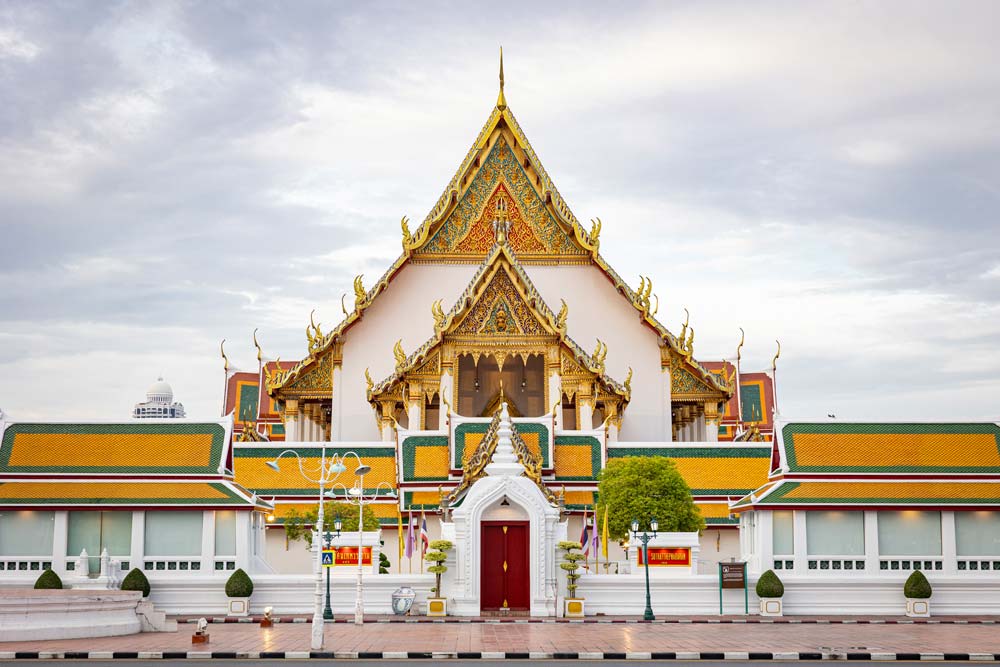
7) Wat Suthat & The Giant Swing
Wat Suthat is an elegant temple known for its large ordination hall, fine murals and the Giant Swing (Sao Chingcha) nearby — a striking red structure that’s a classic photo op. The temple interior has beautiful bronze Buddha images and wood-carved doors.
Combine your visit to this best temples in Bangkok, with a stroll around Rattanakosin island (near by Grand Palace, Museum, and Sanam Luang). The Giant Swing area is great for street photography and food stalls too, especially for those wanting to explore Chinatown.
How to get there:
- BMTA bus / walk / MRT combination: The nearest MRT/BTS access depends on where you start (Sam Yot / Sanam Chai / National Stadium areas) — many visitors use a taxi to the Giant Swing / Wat Suthat area for convenience.
- Alternate: taxi / tuk-tuk to Rattanakosin / Bamrung Muang roads: A short taxi drop-off gets you at the entrance opposite the Giant Swing. This area is walkable between other Old City sights.
Entrance cost & hours:
- Typical fee: 100 THB for tourists.
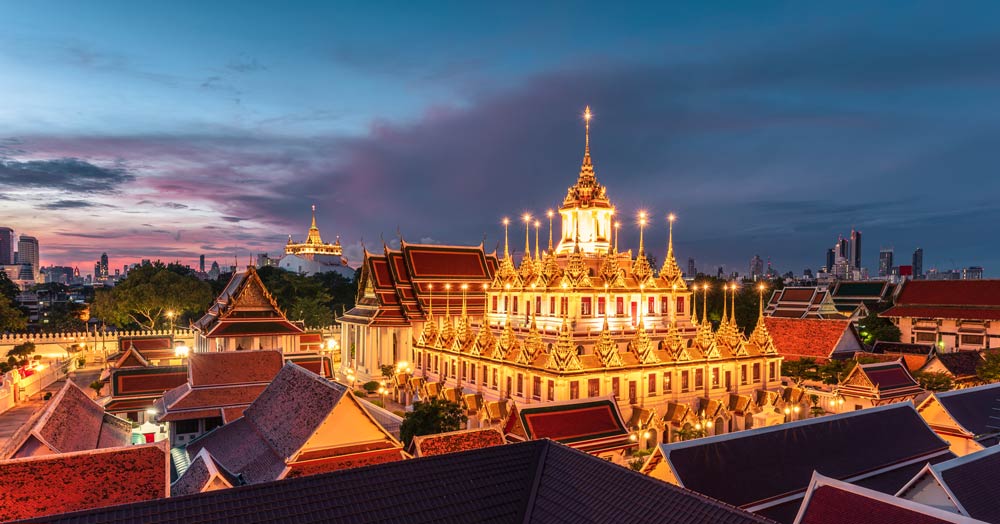
8) Wat Ratchanatdaram (Loha Prasat / Metal Castle)
Our next best temples in Bangkok is Loha Prasat, a remarkable multi-tiered “metal castle” structure and one of only a few of its type in the world. The unique architecture makes for a fun visit but allow time to go up the internal stairways for different vantage points.
How to get there:
- Walk from Khao San / Old City: It’s within walking distance of Khao San Road / Rattanakosin attractions; this makes it an excellent stop on a walking-temple circuit.
- Alternate: taxi / tuk-tuk to Wat Ratchanatdaram: A quick taxi ride from the city center drops you at the gate; combine with nearby Wat Saket or Wat Suthat for a compact touring day.
Entrance cost & hours
- Typical fee: Very modest — many sources list 20 THB (a small donation/fee to help maintenance). Opening times generally cover daylight hours.
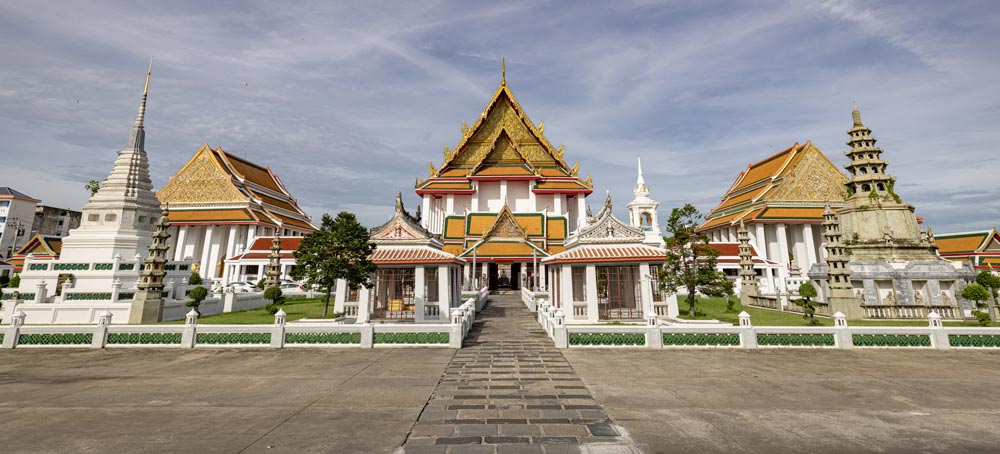
9) Wat Kalayanamit
On the quieter Thonburi side of the Chao Phraya River, Wat Kalayanamit has one of Bangkok’s largest seated Buddha statues — Phra Buddha Trai Rattananayok — and a peaceful riverside setting. It’s less touristy than the big three (Grand Palace, Wat Pho, Wat Arun), so you can soak in the atmosphere without heavy crowds.
How to get there:
- Public transport + ferry: Take the Chao Phraya Express Boat to Tha Rajinee Pier or Tha Yai Arun Amarin Pier, then a short walk. It’s a scenic approach and easy to combine with nearby Wat Arun.
- Alternate: taxi to Thonburi side: A direct taxi to the temple entrance is straightforward if you’re already exploring Thonburi or coming from the west bank.
Entrance cost & hours
- Typical fee: Free entry for most visitors, though donations are welcome; this is one of the best free things to do in Bangkok.
- Opening hours: Daytime until early evening; mornings are particularly serene.
Tips
- If you like photographing temple architecture with fewer people in the frame, this is a good choice.
- Combine with a ferry trip to Wat Arun for a relaxed riverside day.

10) Wat Prayoon (Wat Prayurawongsawas)
Known for its large white chedi (Phra Borommathat Maha Chedi) and turtle pond, Wat Prayoon offers a slightly different temple experience — part religious site, part community space. It’s also UNESCO-recognized for its heritage conservation.
How to get there:
- Public transport + ferry: Take the Chao Phraya Express Boat to Memorial Bridge (Saphan Phut) Pier, then walk or tuk-tuk to the temple.
- Alternate: taxi from Old City: Just across the river from the Grand Palace area, so a quick ride makes it easy to include in a same-day itinerary.
Entrance cost & hours
- Typical fee: Around 20–30 THB for foreigners to enter the chedi area; general grounds are often free.
- Opening hours: Usually open daily, 9 AM – 5 PM.
Tips
- The turtle pond is a hit with kids and photographers.
- The bright white chedi photographs beautifully against a clear blue sky — aim for late morning light.
Bangkok Temple itineraries
Bangkok’s traffic means grouping nearby temples and attractions makes sense. Here are a few sample combos with transport tips:
- Classic Old City half-day: Grand Palace + Wat Phra Kaew (start early) → walk to Wat Pho → ferry across to Wat Arun for sunset. Use the Chao Phraya Express Boat to move river-side and minimize road time.
- Old City + Golden Mount loop (half day): Wat Suthat/Giant Swing → walk to Wat Saket (Golden Mount) for a climb and views → Loha Prasat and nearby small wats. Many of these are walkable or a short tuk-tuk ride.
- Riverside + Chinatown (half day): Start at Wat Traimit in Chinatown (Golden Buddha) → walk to Yaowarat markets → cross by river to visit Wat Arun in the late afternoon. Chinatown is well served by MRT and taxi; Wat Traimit is easily combined with a food walk.
- Dusit day: Benchamabophit (Marble Temple) → Ananta Samakhom Throne Hall (view from outside) → local markets — good for architecture lovers and quieter mornings. This is the perfect mix of local things to do in Bangkok and unique experiences.
Tips for Visiting Temples in Bangkok
- Dress modestly: shoulders and knees covered. Even if a temple seems casual, it’s respectful to cover up — and some will refuse entry for improper dress (Grand Palace strict). Bring a light scarf/sarong for hot days.
- Best time to visit: Early morning (8:00–10:00) avoids heat and crowds for the Grand Palace/Wat Pho. Sunset is magical at Wat Arun and for Golden Mount views. Midday is hot — plan indoor or riverside stops then.
- Many major temples charge small to moderate entrance fees for foreigners (the Grand Palace is the most expensive at 500 THB). Smaller neighborhood wats are often free or have a small donation box. Have small notes/coins ready — some ticket counters don’t give large change.
- Beware of aggressive “guides” outside major sites offering “official tours” at high prices; if you want a guide, book through reputable operators or your hotel. At some touristy spots vendors may be persistent — polite refusal is fine.
- For taxi drivers, insist on the meter or use Grab or Bolt for a meter-equivalent fare.
- Bangkok is hot and humid. Bring water, sunscreen, and a small umbrella.
- Shoes must be removed at some temple interiors — wear socks or easy slip-ons.
- Combine river transport with the temples: The Chao Phraya Express Boat is cheap and scenic — it’s the most pleasant way to reach riverside temples like Wat Arun and the Grand Palace area from many central piers.
- Temple etiquette: Keep your voice low, don’t point your feet at images or people, remove hats and take off shoes where required inside viharns (ordination halls).
- Photography rules vary — many places allow photos but not in certain inner sanctums.
These best temples in Bangkok cover some picturesque, unique and truly stunning options. Visiting the temples add significant value to any trip to the city, so we recommend picking at least 3 for your time in the city.
Best Temples in Bangkok FAQ
The most famous temples in Bangkok are Wat Phra Kaew (Temple of the Emerald Buddha), Wat Arun (Temple of Dawn), and Wat Pho, home to the giant Reclining Buddha. These temples are considered must-see attractions and are among the most visited landmarks in Thailand.
If you only have time for one temple, visit Wat Phra Kaew. Located within the grounds of the Grand Palace, it is Thailand’s most sacred Buddhist temple and features stunning architecture, intricate murals, and the revered Emerald Buddha.
Wat Arun is widely considered the most photogenic temple in Bangkok. Its riverside location, ornate porcelain-covered spires, and beautiful sunrise and sunset views make it a favorite among photographers and content creators.
Yes. Visitors should dress respectfully by covering their shoulders and knees. Avoid sleeveless tops, short skirts, and short shorts. Some major temples may refuse entry to visitors who do not meet the dress code requirements.
Some temples are free, while others charge an entrance fee. Major tourist attractions such as Wat Phra Kaew and Wat Photypically charge admission, while many neighborhood temples are free to enter.
Wat Pho is one of Bangkok’s oldest and most historically significant temples. It predates the founding of Bangkok as the capital and is known for its giant Reclining Buddha and traditional Thai massage school.
The famous Reclining Buddha can be found at Wat Pho. The gold-plated statue measures approximately 46 meters long and is one of the largest Buddha images in Thailand.
Early morning, between 8:00 a.m. and 10:00 a.m., is usually the best time to visit. Temperatures are cooler, crowds are smaller, and the lighting is often ideal for photography.
Yes. Many visitors combine Wat Phra Kaew, Wat Pho, and Wat Arun in a single day since they are located close to each other around the historic district and the river.
Wat Arun offers some of the best views of the city and the Chao Phraya River. Visitors can climb part of the central prang for panoramic river views.
Yes. Most temples are family-friendly and provide a great opportunity for children to learn about Thai culture, history, and Buddhism. The colorful architecture and impressive statues are often particularly appealing to younger visitors.
Thanks for reading!
We love living in Bangkok, exploring Thailand and sharing everything we learn along the way. Comment below if you have any questions and follow us along on Instagram or Facebook.
We value and appreciate all our readers and supporters. If you wish to support That Bangkok Life then please use our Amazon affiliate for your next purchase, it doesn’t cost you anything extra but we make a small commission, allowing us to continue building this website and sharing our love of travel with you.


[…] Wat Arun sits on the west bank of the Chao Phraya River and is one of Thailand’s most iconic landmarks, making it another one of the cheap things to do in Bangkok. Its tall central prang is covered in colorful porcelain and looks especially stunning at sunset when it glows golden. You can climb partway up for beautiful views over the river to enjoy arguably one of the best temples in Bangkok. […]
[…] Wat Arun Ratchawararam, more commonly known as Wat Arun or the Temple of Dawn, is one of Bangkok’s most iconic landmarks. Rising dramatically from the west bank of the Chao Phraya River, its towering spires shimmer in the sunlight and glow beautifully at sunset, making it one of the most photographed temples in Bangkok. […]