

Knowing how to get around Bangkok is essential to enjoying your time in the city, as expats here, we share a complete guide to getting around Bangkok.
Bangkok, the vibrant and sprawling capital of Thailand, is famous for its delicious street food, ornate temples, buzzing nightlife, and endless shopping opportunities. But for first-time visitors, and even seasoned travelers, navigating this enormous city can seem daunting.
Between its notorious traffic jams, sprawling neighborhoods, and an alphabet soup of transport acronyms, understanding how to get around Bangkok efficiently is essential to enjoying all it has to offer.
Thankfully, Bangkok has one of the most diverse transportation networks in Asia. From sleek skytrains to colorful tuk-tuks, here’s a complete breakdown of how to get around Bangkok efficiently, affordably, and like a pro.
How to Get Around Bangkok

1. BTS Skytrain
The BTS (Bangkok Mass Transit System) Skytrain is one of the most convenient, clean, and efficient ways to travel in Bangkok.
Elevated above the congested streets, the BTS bypasses traffic and offers air-conditioned comfort, sweeping views, and easy navigation for English-speaking travelers.
Many of the BTS stops lead into malls, restaurants or hotels, making this an ideal way to get around, especially if you plan on staying along Sukhumvit Road. Additionally, many stops have convenience stores as well as an array of different types of businesses (from trading card stores to hairdressers), so you can stop off and get any purchases or chores done along your route.
Routes:
The BTS has two main lines:
- Sukhumvit Line (Light Green): runs from Khu Khot in the north to Kheha in the southeast, passing key districts like Siam, Asok, Nana and Phrom Phong. The stops along the Sukhumvit line are often debated as the best places to live in Bangkok.
- Silom Line (Dark Green): runs from Bang Wa in the west to National Stadium, connecting to popular stops like Silom, Chong Nonsi, and the Chao Phraya River area.
Both lines intersect at Siam Station, a major shopping and transit hub.
Key Stations:
Sukhumvit Line (Light Green)
- Mo Chit (N8) – Chatuchak Weekend Market, Chatuchak Park
- Victory Monument (N3) – Local shopping and major transport hub
- Siam (CEN) – Interchange station, CentralWorld, Siam Paragon, MBK
- Chit Lom (E1) – Erawan Shrine, Central Embassy
- Nana (E3) – Nightlife, international restaurants
- Asok (E4) – MRT Sukhumvit interchange, Terminal 21 Mall
- Phrom Phong (E5) – EmQuartier, Emporium, Benchasiri Park
- Thong Lo (E6) – Japanese eateries, upscale nightlife
- Bang Na (E13) – BITEC (Exhibition center)
Silom Line (Dark Green)
- National Stadium (W1) – MBK Center, Jim Thompson House
- Siam (CEN) – BTS interchange
- Sala Daeng (S2) – MRT Si Lom interchange, Silom nightlife
- Chong Nonsi (S3) – Sathorn business area, Mahanakhon Skywalk
- Saphan Taksin (S6) – Chao Phraya River boats (Sathorn Pier)
- Bang Wa (S12) – MRT Blue Line interchange
Operating Hours:
Approximately 5:15 AM to midnight.
Fares:
20–60 THB depending on distance. You can pay using:
- Single journey tickets (purchased from machines or counters)
- Rabbit Card (stored value card)
- Bangkok tourist passes (e.g., 1-day unlimited pass)
Tips
- Avoid rush hours (7–9 AM and 5–7 PM)
- Stations are announced in both Thai and English
- Convenient access to major malls (MBK, Terminal 21, CentralWorld)
2. MRT (Metro/Subway)
The MRT (Metropolitan Rapid Transit) is Bangkok’s underground train system. It compliments the BTS and reaches areas that the Skytrain does not, such as the old town and the northern suburbs.
Routes:
- Blue Line: loops from Bang Sue to Hua Lamphong and around through Chinatown, Sanam Chai (near the Grand Palace), and back.
- Purple Line: connects to the Blue Line at Tao Poon and heads northwest toward Nonthaburi. This is undergoing construction and extension, so check this line during your visit, as it continues to extend and reach more attractions across the city.
Key Stations:
- Chatuchak Park / Kamphaeng Phet: Access to Chatuchak Weekend Market
- Sanam Chai: Close to the Grand Palace and Wat Pho
- Sukhumvit: Connected to BTS Asok
Fares:
15–70 THB depending on distance.
Operating Hours:
5:30 AM to midnight.
Payment Options:
- Single tokens (purchased at machines)
- MRT card or stored-value cards

3. Airport Rail Link (ARL)
The ARL is a fast and convenient way to get to and from Suvarnabhumi Airport and the city. It connects with the BTS and MRT, making it a great choice for arriving travelers.
Route:
- Runs from Suvarnabhumi Airport to Phaya Thai Station, where you can transfer to the BTS.
Key Stations:
Suvarnabhumi Airport – Main international airport
Makkasan – MRT Phetchaburi interchange
Ratchaprarop – Close to Pratunam Market, CentralWorld
Phaya Thai – BTS Sukhumvit Line interchange, city center connection
Fares:
15–45 THB
Travel Time:
About 30 minutes from airport to downtown.
Operating Hours:
6:00 AM to midnight

4. Taxis in Bangkok
Taxis in Bangkok are plentiful, cheap (compared to Western standards), and air-conditioned. They’re a great option for door-to-door travel, especially at night when trains stop running.
How to Use:
- Hail from the street or use apps (Grab, Bolt, inDrive – see No.9)
- Always ensure the meter is on; starting fare is 35 THB
- Avoid flat-rate deals, especially around tourist areas
Tips:
- Try to have your destination written in Thai
- Traffic can be brutal during rush hour, so allow extra time
- Some drivers may refuse long-distance trips; try another taxi or use the Grab app

5. Tuk-Tuks
These iconic three-wheeled vehicles are synonymous with Bangkok. Colorful and chaotic, tuk-tuks are more of a cultural experience than a practical mode of transport.
How to Use:
- Negotiate the price before the ride (usually 100–300 THB depending on distance)
- Good for short rides or tourist zones
- Be aware of scams (e.g., detours to tailor shops)
Tips:
- Not ideal during the hot afternoon
- Great for short, fun trips, especially at night
- Ask your hotel for fare guidance beforehand

6. Motorbike Taxis
Motorbike taxis are the fastest (and sometimes scariest) way to navigate Bangkok’s traffic. Drivers wear colored vests and usually wait near BTS/MRT stations or street corners.
How to Use:
- Tell the driver your destination and agree on a price
- Fares typically start at 20 THB for short rides
- Wear a helmet (they will provide one) – This is ESSENTIAL. Not only is it dangerous without a helmet but it is also the law.
Best For:
- Short trips or narrow alleys
- Times when you’re running late
- During rush hour if you need to get somewhere quickly
Safety Note:
Motorbike taxis are not for the faint-hearted or those with lots of luggage (or any luggage).

7. Chao Phraya River Boats
Bangkok’s river is both scenic and practical. River boats (called Chao Phraya Express Boats) are a wonderful way to beat traffic and visit historical landmarks.
Types:
- Orange Flag Boats: Most useful for tourists. Run frequently and stop at major piers.
- Blue Flag (Tourist Boat): More expensive but has English commentary and stops at tourist hotspots.
- No Flag: Local boats, cheapest option, but can be confusing.
Fares:
- Orange Flag: 15 THB flat fare
- Blue Flag: 30–60 THB
Key Piers:
- Tha Chang: Near Grand Palace and Wat Pho
- Tha Tien: For Wat Arun
- Sathorn Pier: Connects to BTS Saphan Taksin
8. Khlong (Canal) Boats
Bangkok was once called the “Venice of the East,” and its network of canals still functions as a public transportation system. Canal boats can be an adventurous and efficient way to bypass traffic in central areas.
Routes:
- The most popular route is the Saen Saep canal service, which runs east-west through central Bangkok.
Fares:
8–20 THB
Tips:
- Boats can be fast but uncomfortable and wet
- Be cautious when boarding and disembarking
- Great for reaching places like Pratunam Market or the Golden Mount

9. Grab and Ride-Hailing Apps
Grab (Southeast Asia’s version of Uber) is widely used in Bangkok for car and motorbike rides. Other apps like Bolt and inDrive are also popular alternatives, often with lower prices.
When looking at how to get around Bangkok, this is one of our favorite options when visiting places not along the BTS or MRT lines.
Benefits:
- Fixed pricing
- No need to negotiate
- Can choose car type (GrabCar, GrabBike, GrabTaxi)
Drawbacks:
- Prices surge during peak hours
- Drivers may call to confirm pickup in Thai.

10. Buses in Bangkok
In 2025, Bangkok’s bus system has seen significant improvements, making it more accessible and traveler-friendly than ever before.
While traditionally known for being difficult to navigate due to language barriers and inconsistent schedules, the system has undergone modernization, with clearer route maps, digital payment options, and more air-conditioned buses on major routes.
The introduction of GPS tracking on most buses, integrated with apps like ViaBus, now allows commuters to check real-time locations and estimated arrival times.
Many of the older, non-air-conditioned red and blue buses are being phased out in favor of cleaner, low-emission models, and signage at bus stops now increasingly includes English translations.
The bus network remains one of the most affordable ways to explore the city, serving routes that reach beyond the BTS and MRT lines, including outer neighborhoods and suburban zones. For both locals and adventurous travelers, buses are now a more viable and comfortable option for those wanting to know how to get around Bangkok.
Types:
- Red/Blue/Orange Buses: Non-A/C, cheapest (8–10 THB)
- Yellow/Blue Buses: A/C and more comfortable (10–20 THB)
- Smart Buses: Modern buses with QR payment
Payment:
Pay the conductor directly in cash or via QR/Contactless card payments for smart buses.
Best For:
- Locals and budget travelers
- Off-the-beaten-path locations not served by BTS/MRT

11. Songthaews
These converted pickup trucks with benches are more commonly seen in outer districts and suburbs. They’re not often used in central Bangkok but can be handy if you’re heading out of town.
How to Use:
- Flag one down
- Tell the driver where you’re going
- Pay a small fee (usually 10–30 THB)
12. Bicycles and E-Scooters
Cycling in Bangkok is possible, though best in parks or dedicated bike lanes. Some neighborhoods like Ari and Bang Krachao are bike-friendly.
Rental Options:
- Many hotels offer free or cheap bicycle rentals
- Scooter-sharing apps like Neuron and Bolt (limited to certain zones)
Where to Ride:
- Lumphini Park
- Benjakitti Park
- Bang Krachao (the “green lung” of Bangkok)

13. Walking
Walking in Bangkok is underrated. While heat and humidity can be a challenge, many neighborhoods are walkable and reveal hidden cafes, temples, and street food gems.
Best Areas for Walking:
- Sukhumvit Soi 11 and 38: Food stalls and nightlife
- Old Town (Rattanakosin): Temples, palaces, museums
- Chinatown (Yaowarat Road): Night food markets
- Ari: Hipster cafés and quiet streets
Safety Tips:
- Use pedestrian overpasses and crosswalks
- Stay hydrated and wear sunscreen
- Be cautious of uneven pavements
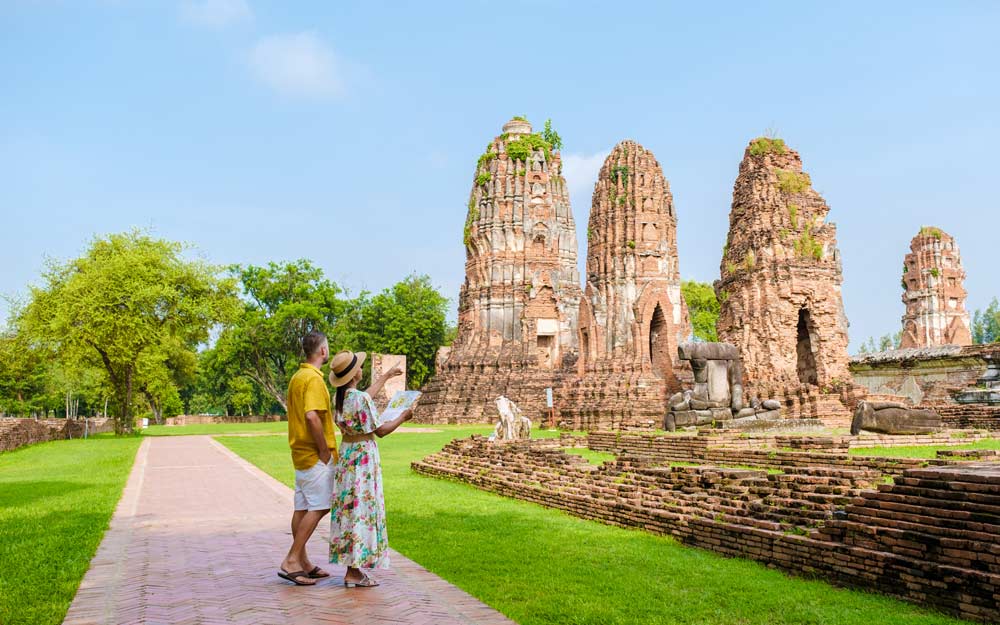
14. Day Tours and Hotel Transfers
For those looking to skip the hassle, Bangkok has countless options for guided day tours or private car hires, especially for some of the best day trips from Bangkok like:
- Ayutthaya
- Damnoen Saduak Floating Market
- Maeklong Railway Market
- Pattaya
- Khao Yai National Park
- Kanchanaburi
Many hotels can arrange these or offer shuttle services to malls and BTS stations.

Tips for how to get around Bangkok like a local
Download Helpful Apps:
- Grab: Ride-hailing
- ViaBus: Real-time bus tracker
- Google Maps: Reliable for public transport
- Transit Bangkok: BTS/MRT schedules
Use Landmarks, Not Addresses:
Thai people usually navigate by landmarks rather than street addresses. Mention a mall, BTS station, or temple nearby instead of an exact address.
Avoid Peak Hours:
Morning and evening rush hours mean long travel times. Plan sightseeing accordingly or opt for river transport during peak traffic.
Carry Small Change:
Many transport options don’t accept large bills. Keep coins and small denominations for buses, boats, and street food.
Dress Modestly for Temple Visits:
If you’re traveling by public transport to temples, carry a shawl or wear long sleeves and pants.
Things to Know Before You Go To Bangkok
Bangkok’s charm lies in its vibrant chaos, and transportation is no exception. Whether you’re gliding through the skyline in a BTS train, zipping past traffic on a motorbike taxi, or cruising the Chao Phraya River at sunset, how you get around can be part of the adventure.
By mixing and matching modes—Skytrain for malls, boats for temples, taxis at night—you’ll find that navigating Bangkok is not just manageable, but also deeply rewarding. Stay open-minded, stay cool (literally), and don’t forget to look up from your map and take it all in.
Thanks for reading!
We love living in Bangkok, exploring Thailand and sharing everything we learn along the way. Comment below if you have any questions and follow us along on Instagram or Facebook.
We value and appreciate all our readers and supporters. If you wish to support That Bangkok Life then please use our Amazon affiliate for your next purchase, it doesn’t cost you anything extra but we make a small commission, allowing us to continue building this website and sharing our love of travel with you.


[…] to mention offering some much-needed relief from the buzzing motorbikes and skyline blur when getting around Bangkok. Below I’ll go over some of the best parks in Bangkok, what makes each unique, and tips on […]
[…] Getting around Bangkok and getting around Thailand is easy and convenient, with options ranging from tuk-tuks and motorbike taxis to buses, BTS Skytrain, and MRT subway lines in major cities. […]
[…] the BTS and MRT is a great way to get around Bangkok. The nearest MRT […]
[…] for Siam Paragon, then take the escalators down to the basement level. The BTS is a great way to get around Bangkok, so try and stay near one of the BTS stops for easy travel around the […]
@thatbangkoklife
Tag your photos for a chance to be featured on our Instagram